





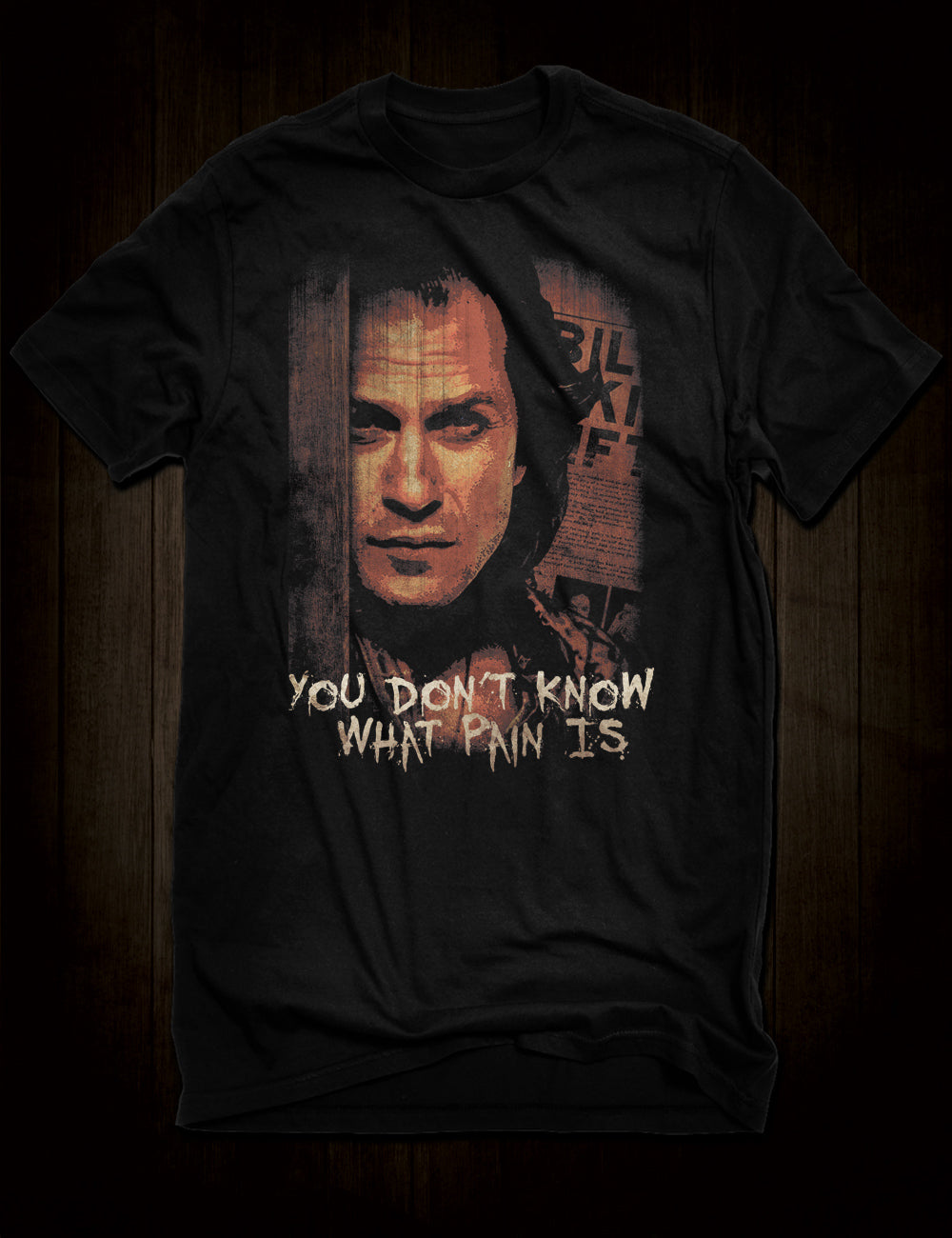
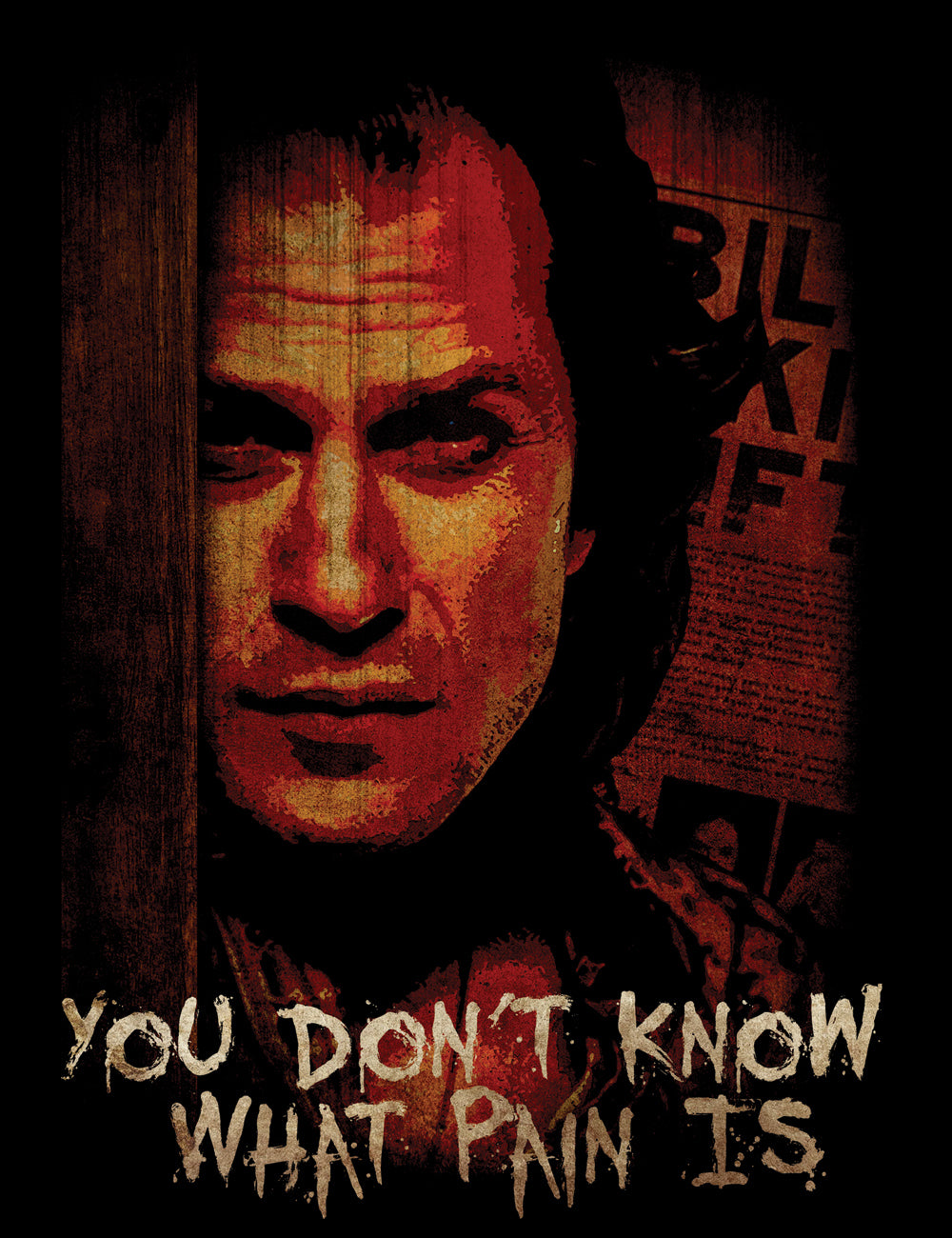
Silence of The Lambs Buffalo Bill T-Shirt

SILENCE OF THE LAMBS BUFFALO BILL T-SHIRT
Death's-Head Moths, Basement Horrors and the Monster Behind the Ordinary Door
A modest suburban house. A little white dog. A sewing machine. A basement nobody should ever enter. In Jonathan Demme's The Silence of the Lambs, horror does not always announce itself through gothic castles or supernatural apparitions. Sometimes it lives behind an ordinary front door, waiting for somebody to descend the stairs.
Buffalo Bill, the murderous identity adopted by Jame Gumb, became one of the most disturbing screen villains of the early 1990s. Portrayed by Ted Levine in Demme's 1991 film, Gumb is the elusive serial killer whose crimes bring FBI trainee Clarice Starling into contact with the imprisoned psychiatrist Hannibal Lecter.
The film was adapted from Thomas Harris's 1988 novel, a work that placed criminal investigation, psychological manipulation and profound personal vulnerability within the same narrative. While Hannibal Lecter's intelligence and terrifying composure command much of the attention, Buffalo Bill provides the immediate menace driving Clarice's investigation.
Ted Levine's performance is remarkable for its unpredictability. Gumb can appear awkward, theatrical, menacing or almost childishly pleased with himself. His behaviour shifts without warning, creating a character whose eccentric domestic rituals sit beside acts of calculated brutality. Levine refuses to make the murderer a simple embodiment of evil. Instead, Gumb becomes a deeply unpleasant and frighteningly unstable individual.
His home is one of the film's most memorable environments. Beyond the ordinary domestic spaces lies a concealed world of captivity, obsession and violence. Sewing equipment, collected objects and the ominous presence of the death's-head hawkmoth create a visual language of transformation and grotesque reinvention.
The moth is particularly important. Its distinctive skull-like marking and metamorphosis from caterpillar to winged insect echo Gumb's distorted obsession with changing himself. The discovery of moth pupae becomes a crucial investigative clue, connecting seemingly unrelated victims and bringing Clarice closer to the killer's identity.
Demme constructs the film's final confrontation with extraordinary control. Clarice enters a house without fully understanding what awaits her, and the investigation shifts from forensic procedure into a terrifying struggle for survival. The basement sequence, with its darkness, disorientation and increasingly desperate pursuit, remains one of the defining moments of modern American suspense cinema.
Buffalo Bill also belongs to a wider tradition of cinematic monsters whose apparent normality makes them especially frightening. There is nothing supernatural about Gumb. His house exists in an ordinary neighbourhood, his possessions are familiar, and his monstrous behaviour is concealed within a recognisable domestic setting.
The Silence of the Lambs became a landmark psychological thriller, combining exceptional performances, unsettling imagery and an unusually intimate understanding of fear. Ted Levine's contribution was essential to its success, creating an antagonist whose unpredictable behaviour remained disturbing long after the investigation concluded.
The Silence of the Lambs Buffalo Bill T-Shirt celebrates this dark chapter of cult cinema, Thomas Harris's unforgettable characters and one of the most unnerving performances in the history of the psychological thriller.
A death's-head moth. A locked basement. A house with terrible secrets.
Some doors should remain closed.
FREQUENTLY ASKED QUESTIONS (FAQs)
What is Buffalo Bill's real name in The Silence of the Lambs?
The killer is named Jame Gumb, a character created by Thomas Harris for his 1988 novel. Ted Levine portrayed him in Jonathan Demme's acclaimed 1991 film adaptation.
What does the moth symbolise in The Silence of the Lambs?
The death's-head hawkmoth represents metamorphosis and Gumb's disturbed obsession with physical transformation. Its presence also supplies investigators with an important clue connecting his crimes.
What makes Ted Levine's performance so unsettling?
Levine combines vulnerability, theatrical behaviour, awkward humour and sudden menace. Those unpredictable qualities give Gumb a disturbing human presence rather than presenting him as a conventional horror-film villain.