
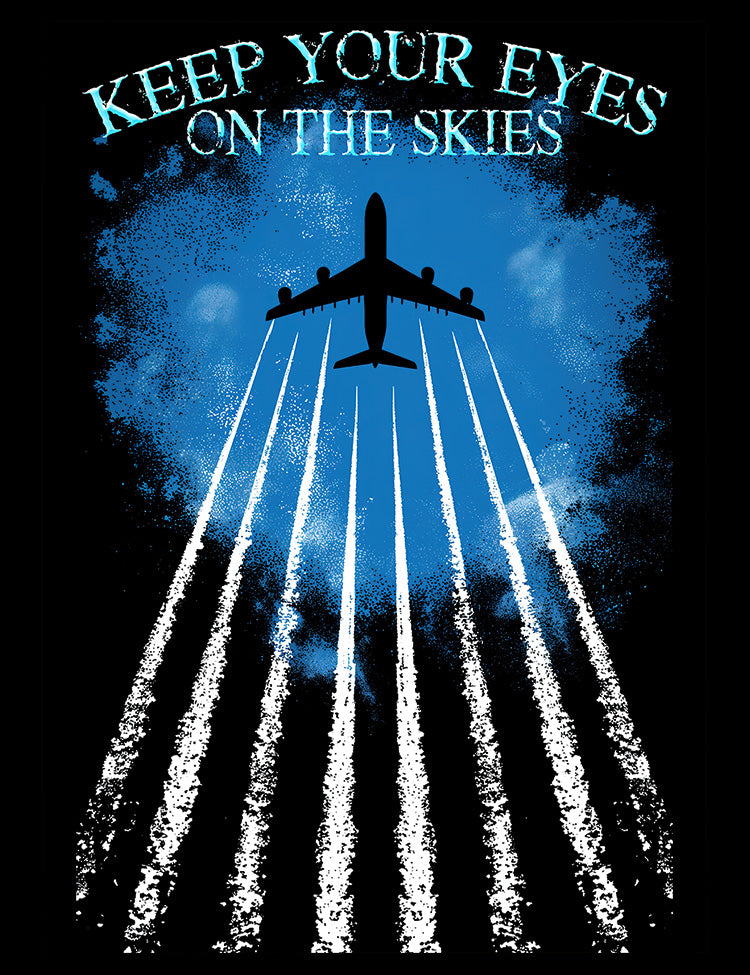


Die Monster Die T-Shirt

DIE MONSTER DIE T-SHIRT
Lovecraft Goes Technicolor: Boris Karloff and the Blasted Heath
When an American traveller arrives in a remote English village and finds that nobody will take him anywhere near the local manor house, sensible behaviour would suggest turning around. Stephen Reinhart, played by Nick Adams, has other ideas. His determination to visit his fiancée Susan Witley leads him through a dead landscape, into a decaying country estate and eventually towards something that does not belong anywhere on Earth.
Released in 1965, Die, Monster, Die! occupies a curious point where Gothic horror, American International Pictures and H. P. Lovecraft collided. Directed by Daniel Haller and written by Jerry Sohl, the film was a loose adaptation of Lovecraft's 1927 story The Colour Out of Space. In Britain it appeared under the considerably more restrained title Monster of Terror, while during development it had also been known as Colour Out of Space and House at the End of the World.
The change of title was hardly the only liberty taken with Lovecraft. His original story concerns the aftermath of an inexplicable meteorite landing on a New England farm, contaminating the landscape with a colour that cannot properly be described and slowly destroying the Gardner family. Haller's film transports the action to England, introduces a conventional romantic hero and turns the mysterious extraterrestrial influence into something closer to radioactive experimentation.
"It was just a colour out of space—a frightful messenger from unformed realms of infinity beyond all Nature as we know it."
Boris Karloff plays Nahum Witley, the secretive patriarch of the Witley estate. Beneath the house lies a meteorite whose strange radiation has been used in experiments intended to accelerate plant growth. The results are predictably less agricultural than hoped. Enormous vegetation, mutated creatures, illness and an increasingly poisoned landscape all point towards forces that Witley is no longer capable of controlling.
The production also carried a strong connection with Roger Corman's celebrated Edgar Allan Poe cycle for American International Pictures. Before directing Die, Monster, Die!, Haller had worked extensively as a production designer on Corman films including House of Usher, The Pit and the Pendulum and The Raven. His move into directing therefore brought much of that visual language with him: enormous interiors, winding staircases, shadowy corridors, ancestral secrets and an isolated mansion seemingly designed to ensure that nobody makes a sensible decision after nightfall.
Filming took place in England, principally at Shepperton Studios, with production beginning in February 1965. Alongside Karloff and Adams were Suzan Farmer as Susan Witley, Freda Jackson as the bedridden Letitia Witley and Patrick Magee as Dr Henderson. The result feels simultaneously British and American: an English Gothic house invaded by an energetic American protagonist, produced within AIP's colourful mid-sixties approach to horror.
Lovecraft's almost abstract conception of cosmic horror was never going to be easy to place on screen. The story deliberately describes something outside ordinary human perception; a film eventually has to point a camera at something. Die, Monster, Die! solves the problem by embracing mutated plants, glowing laboratories and Gothic spectacle rather than attempting literal fidelity. What survives from Lovecraft is the more important idea: the land itself has become wrong.
That mixture gives the film its enduring charm. It is part haunted-house picture, part science-fiction mutation story and part late-period Karloff vehicle, with an unmistakable streak of Lovecraft running beneath everything. The cosmic unknown may have acquired a laboratory and a convenient electrical supply, but the blasted heath still waits outside.
💬 FREQUENTLY ASKED QUESTIONS (FAQs)
Q1: Is Die, Monster, Die! based on an H. P. Lovecraft story?
Yes. Jerry Sohl's screenplay was loosely based on Lovecraft's 1927 short story The Colour Out of Space, although the film changes the setting, characters and much of the original plot.
Q2: What was Die, Monster, Die! called in Britain?
The film was released in the UK as Monster of Terror. Earlier working titles included Colour Out of Space and House at the End of the World.
Q3: Did Daniel Haller direct any other Lovecraft adaptation?
Yes. Haller later directed The Dunwich Horror in 1970, another American International Pictures production adapted from a story by H. P. Lovecraft.