









Death's-Head Hawkmoth T-Shirt

DEATH'S-HEAD HAWKMOTH T-SHIRT
The Skull-Marked Messenger from the Darkest Corners of Cinema
Across the darkness of a collector's cabinet, a moth spreads its wings. A pale, almost human skull seems to stare from its back. It is an image that belongs equally to the natural world and the nightmare, a tiny emblem of mortality carried by a creature that has fascinated naturalists, storytellers and horror filmmakers for generations.
The death's-head hawkmoths belong to the genus Acherontia, a group whose striking thoracic marking resembles a skull. Their ominous name draws on ancient mythology: Acheron is a river of the underworld, while Atropos is the Fate associated with cutting the thread of life. The European species Acherontia atropos is especially well known for its remarkable size, skull-like pattern and unusual ability to enter beehives in search of honey.
Yet for an entire generation of filmgoers, the moth acquired another identity. In Jonathan Demme's 1991 psychological thriller The Silence of the Lambs, an insect becomes a clue in the hunt for the murderer known as Buffalo Bill. Its appearance connects an apparently ordinary object to something profoundly disturbing, and turns the process of metamorphosis into a central visual theme.
The film follows FBI trainee Clarice Starling as she investigates a series of murders and seeks insight from the imprisoned psychiatrist Hannibal Lecter. Thomas Harris's story uses the forensic examination of minute details to move through an increasingly unsettling world. The moth, identified in the story with Acherontia styx, is more than an atmospheric flourish: it helps establish a pattern between the killer's victims.
Transformation is the unsettling idea beneath the film's imagery. Caterpillar, pupa and adult moth are stages in a dramatic physical change, and the killer's fixation on a grotesquely imagined reinvention of himself gives that natural cycle a deeply sinister meaning. The moth's elegant symmetry becomes the counterpoint to the horror of the crime.
The symbolism was already powerful long before the film. In European folklore, the death's-head hawkmoth was sometimes treated as an omen because of the apparent skull on its thorax. Artists and writers found in the insect a ready-made memento mori: a reminder that beauty and decay are not always far apart. Its association with the supernatural owes more to human imagination than to anything threatening about the creature itself.
That collision between scientific wonder and gothic symbolism gives the moth its enduring fascination. To an entomologist, it is a remarkable example of adaptation and natural pattern. To the horror enthusiast, it is an unforgettable image from a film whose atmosphere still clings to the smallest of details.
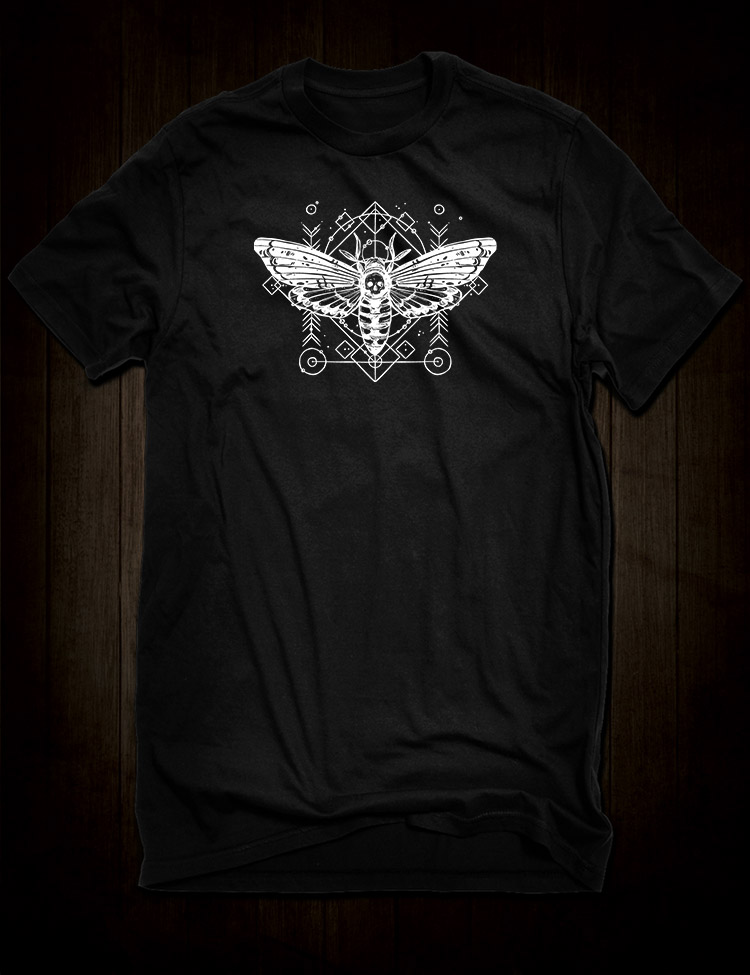
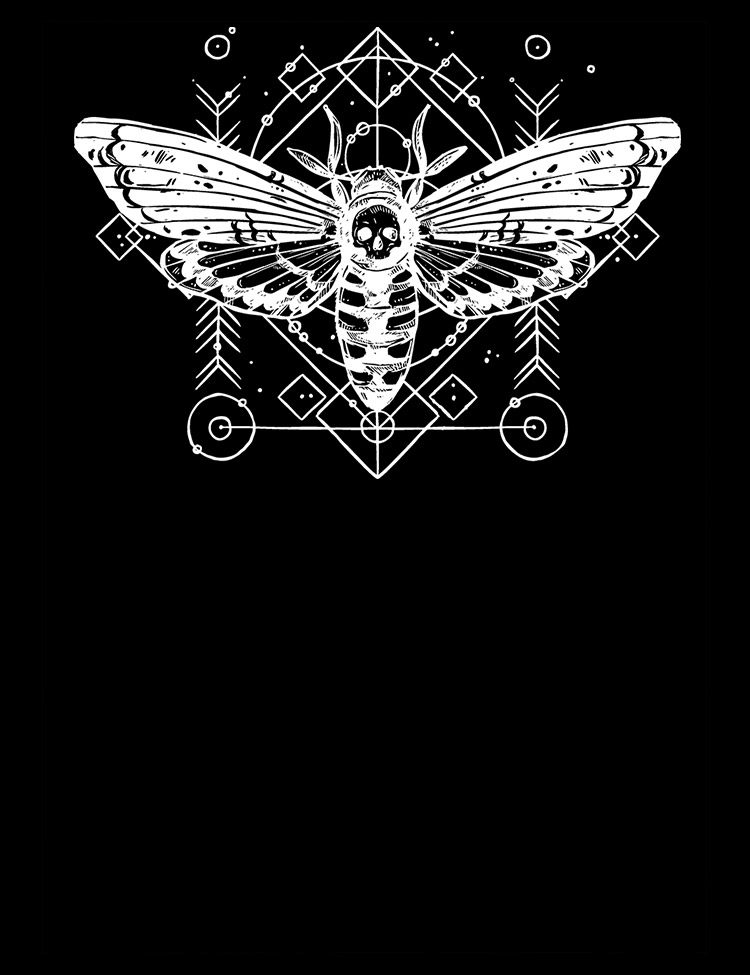
The Death's-Head Hawkmoth T-Shirt celebrates both identities: an extraordinary insect and a distinctive symbol of modern psychological horror. Its stylised moth artwork offers a darker alternative to conventional film merchandise, rooted in natural history and cult cinema alike.
A mysterious specimen. A fatal clue. A skull hidden in plain sight.
Some things are beautiful because they are unsettling.
FREQUENTLY ASKED QUESTIONS (FAQs)
Which death's-head moth appears in The Silence of the Lambs?
The species associated with the story is Acherontia styx, one of several death's-head hawkmoths. The better-known European species is Acherontia atropos, which shares the characteristic skull-like marking.
Why are death's-head hawkmoths associated with death?
The pale marking on their thorax resembles a human skull, inspiring centuries of folklore, ominous names and appearances in gothic art. The insect itself is not a supernatural omen.
What makes the moth important to Clarice Starling's investigation?
The discovery of moth-related evidence helps connect victims and provides investigators with a clue to the killer's obsession with physical transformation.