




10 Cult Series That Were Years Ahead of Their Time
The Weird World of British Television
10 Cult Series That Were Years Ahead of Their Time

Britain has a peculiar talent for placing the inexplicable inside the familiar. A suburban living room, an old railway station or a seaside holiday village can become more unsettling than a remote haunted castle. Television, once confined to small screens in ordinary houses, made the contrast especially powerful.
The most intriguing British genre series did not always explain their mysteries. They allowed awkward pauses, empty corridors and odd authority figures to do some of the work. Their special effects might have been economical, but their ideas were extravagant.
These ten programmes represent different decades and different types of unease. Together they tell the story of British television refusing to behave itself.
Essential History & Key Works
Quatermass II (1955)
Nigel Kneale took the scientific establishment, a familiar source of postwar reassurance, and made it the setting for a frightening account of infiltration. The serial established that television science fiction could be political, adult and deeply suspicious of official explanations. Its live-television origins give it a particular urgency.
The Quatermass Experiment (1953)
The earlier BBC serial followed a rocket returning with fewer astronauts than it launched. Much of the original broadcast has not survived, but the production became a touchstone of British television science fiction, placing existential uncertainty into the new medium.
The Prisoner (1967–68)
Patrick McGoohan’s Number Six wakes in the Village, a perfectly maintained resort where everyone smiles and nobody can leave. The series turned identity, data gathering, coercion and personal freedom into pop-art nightmares. Portmeirion’s architecture and the giant white Rover made its visual world unforgettable.
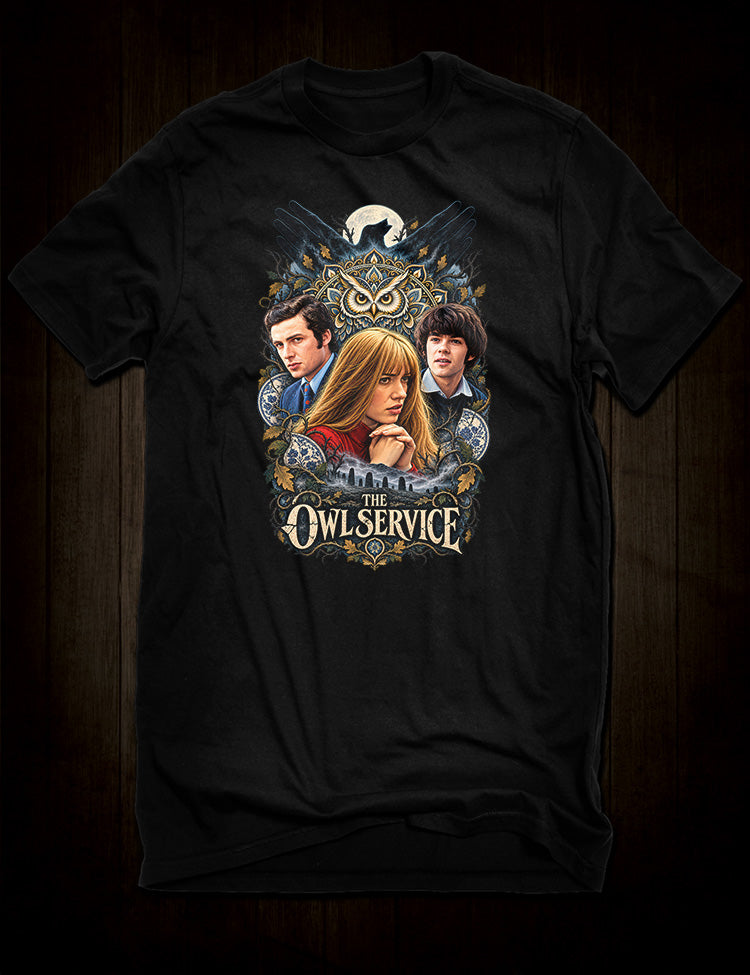
The Owl Service (1969–70)
Alan Garner’s novel became a disturbing Granada adaptation in which Welsh mythology intrudes upon a modern household. The combination of class tension, adolescence, landscape and ancient recurrence produces something more unsettling than conventional children’s fantasy.
Doomwatch (1970–72)
Created by Kit Pedler and Gerry Davis, this BBC series explored technological risk, pollution and scientific responsibility. Its institutional arguments can appear matter-of-fact, which makes its anxieties about modern systems feel remarkably contemporary.
The Stone Tape (1972)
Nigel Kneale’s television play imagines researchers discovering that the fabric of a building may preserve impressions of traumatic events. It is a classic example of rational inquiry deepening rather than dispelling a haunting.
Children of the Stones (1977)
A village surrounded by ancient standing stones becomes a closed system of frightening communal happiness. The series blends archaeology, science fiction and folk horror, with the Wiltshire landscape doing much of the atmospheric work.
Sapphire & Steel (1979–82)
Peter J. Hammond’s elusive agents investigate disruptions in time rather than conventional extraterrestrial threats. Its sparse locations and cryptic dialogue make the everyday world feel porous. The railway-station adventure remains one of British TV’s most uncanny stories.
The Changes (1975)
Based on Peter Dickinson’s novels, this BBC series imagines a modern society abruptly turning against machinery. The unsettling premise exposes how quickly everyday infrastructure can become a source of fear and suspicion.
The Singing Detective (1986)
Dennis Potter folds memory, popular songs, detective fiction and illness into a fractured narrative. It is not horror or science fiction, but its unstable reality demonstrates how far the medium had moved beyond straightforward television naturalism.
Why the unease survives
The constrained British television studio could become a great advantage. An empty set drew attention to sound: a ticking clock, the scrape of a chair, a single voice from outside the frame. Budgetary restraint encouraged suggestion and made uncertainty an artistic resource.
Recurring preoccupations connect these series: distrust of bureaucracy, the fragility of personal identity, dangerous scientific ambition and the suspicion that ordinary life is a controlled experiment. These themes feel entirely at home in modern stories about surveillance and technological systems.
For a first encounter, begin with The Prisoner for visual audacity, The Stone Tape for a concentrated evening of unease, and Sapphire & Steel for the strangest possible form of domestic science fiction.
The Collector’s Edit
Relevant designs from Hellwood Outfitters, selected as cultural connections to the stories above. Product images use editable Shopify image URLs; the design stays within this article rather than appearing as a separate theme section.


Sapphire and Steel
A design inspired by the brilliantly unnerving time investigators.
View T-Shirt →
Keep exploring in the related Hellwood collection, or browse the Field Guides directory for another investigation.
Continue the Investigation
The Hellwood Field Guides connect cultural research with the films, books and histories behind the designs. Return to the Archive whenever the subject grows stranger.
Explore the Hellwood Archive →Frequently Asked Questions
What are the strangest British TV series?
The Prisoner, Sapphire & Steel, Children of the Stones and The Stone Tape are useful starting points, though each belongs to a different television tradition.
Is The Prisoner science fiction?
It combines spy thriller, allegory, psychological drama and science fiction rather than fitting neatly into one category.
Where should I start with classic British cult television?
Start with a self-contained work such as The Stone Tape before moving to the more ambitious serials.
The Hellwood Field Guides — independent cultural history. Products are original, unofficial designs. Historical events involving deaths or abuse are discussed for context, not endorsement.