








The Willows: How Algernon Blackwood Made the Danube Terrifying Without Inventing a Monster
There is no haunted house in The Willows. No vampire waits behind a curtain. No ancient corpse climbs out of a coffin.
Algernon Blackwood gives us something less accommodating: some bushes beside a river.
Published in 1907, Algernon Blackwood’s The Willows remains one of the defining works of weird fiction precisely because it refuses to explain what its characters should be frightened of. Two men paddle down the Danube, camp on a willow-covered island and gradually become convinced that they have wandered somewhere human beings were never intended to notice.
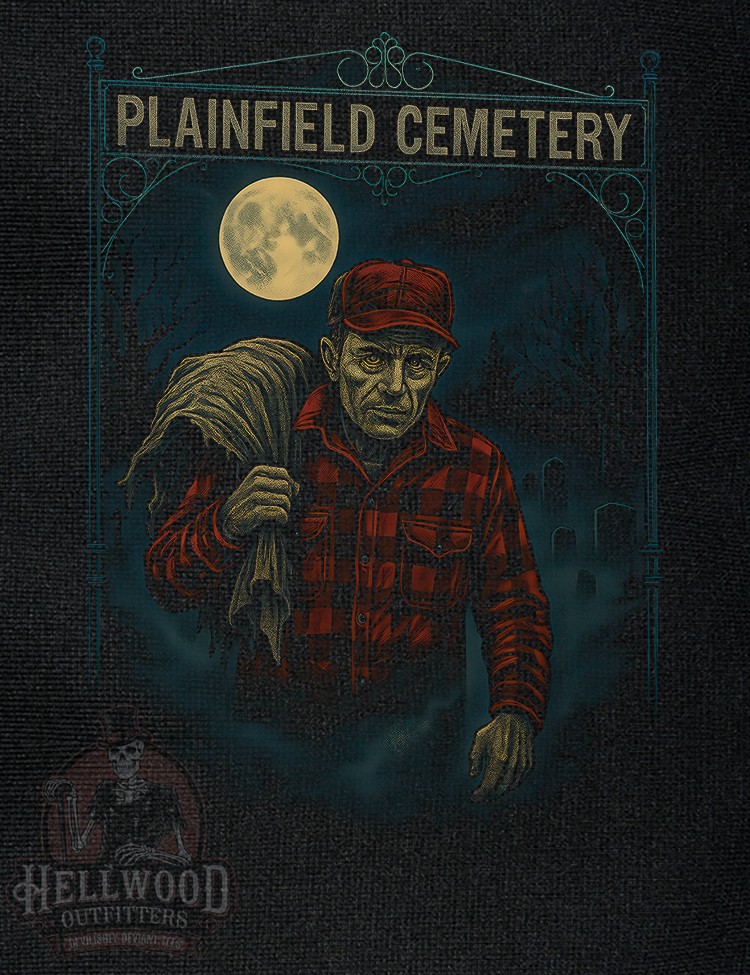
The story behind Hellwood’s Algernon Blackwood T-Shirt is supernatural horror stripped almost completely of conventional supernatural furniture.
The Horror Begins with Geography
Blackwood places his travellers on the Danube after leaving Vienna and before reaching Budapest, where the river spreads through marshland, sandbanks and willow-covered islands.
That landscape does most of the work.
The river is swollen. Channels shift. The low willows move constantly in the wind. Distance becomes difficult to judge. After the two travellers establish camp, ordinary geography starts behaving like something with intentions.
The crucial trick is that Blackwood never needs the landscape literally to come alive. It merely needs to become impossible to dismiss as passive.

For a story written before cosmic horror acquired tentacles, encyclopaedias and marketable plush toys, this is remarkably effective.
What Exactly Is in the Willows?
Blackwood carefully avoids supplying a useful answer.
The travellers hear strange sounds. They glimpse ambiguous shapes. Their canoe is damaged. Their supplies are disturbed. Peculiar impressions appear in the sand. At night, enormous forms seem to rise above the willows.
Yet the story never settles comfortably into “there is a monster outside the tent.” The men begin instead to suspect that the island lies near some kind of boundary and that immense non-human forces can occasionally press through it.
That uncertainty separates Blackwood from the more mechanical ghost story. His supernatural fiction frequently treats the unknown not as an intruder entering normal reality but as evidence that normal reality was never particularly complete.
It also explains why The Willows belongs naturally beside Hellwood’s Horror & Sci-Fi Novels collection. Its central fear is essentially cosmic: humanity discovers that it may occupy considerably less of existence than previously assumed.
The Mystic Who Wrote Horror
Blackwood was unusually well equipped for the job.
Born in 1869, he lived an adventurous and occasionally precarious life before becoming established as a writer. His occupations included farming, journalism and hotel work, and his fascination with mysticism developed alongside a serious enthusiasm for wilderness and travel.
He also joined the Hermetic Order of the Golden Dawn, the occult organisation associated with figures including Arthur Machen and W. B. Yeats. Yet reducing Blackwood to an “occult writer” misses what makes him interesting.
Nature in his fiction is not simply a hiding place for supernatural creatures. Nature itself can be the supernatural experience.

That distinction runs through The Willows. The protagonists are not confronting evil in the conventional sense. They may simply have attracted the attention of something operating according to rules in which human survival has no particular importance.
Why The Willows Still Feels Modern
The story’s influence is easy to understand. Modern weird horror repeatedly returns to the same territory: isolated people encounter something impossible, explanations make matters worse, and the universe proves under no obligation to provide closure.
H. P. Lovecraft admired The Willows enormously, and the connection between Blackwood’s unknowable presences and later cosmic horror is difficult to miss. Hellwood’s Lovecraft T-Shirt provides the obvious next stop, while the wider Famous Writers collection contains plenty of authors who found respectable reality insufficient.
But Blackwood remains stranger than many of his descendants because he does not seem entirely hostile towards the unknown.
There is terror in discovering that humanity is insignificant. There is also wonder.
That tension is why The Willows survives. Blackwood takes two men, a canoe, a tent and a riverbank and gradually removes the comforting assumption that the world belongs to them.
More than a century later, the willows are still moving.

ALGERNON BLACKWOOD T-SHIRT
A Hellwood tribute to the master of supernatural fiction who discovered that a river, a wilderness and the suspicion of something just beyond human perception could be more disturbing than any conventional monster.