
The Death of Johnny Ringo: How a Probable Suicide Became the Old West’s Perfect Murder Mystery
On 14 July 1882, teamster James Yoast found a dead man beneath an oak in Arizona's West Turkey Creek Valley.
There was a bullet wound through his head. A revolver remained with the body. One chamber had been fired. His boots were missing and pieces of undershirt had been wrapped around his feet.
The dead man was John Peters Ringo.
The official conclusion was suicide. That should have settled the Johnny Ringo death story.
Instead, it produced one of the Old West's most persistent murder mysteries.
The Gunfighter Who Missed the O.K. Corral
Ringo's reputation has always been slightly larger than his documented career.
Born in Indiana in 1850, he became involved in Texas's violent Mason County War during the 1870s before appearing in southeastern Arizona. By 1879 he was moving among the men later associated with the Cochise County Cowboys, the loose outlaw faction that became bitterly opposed to the Earps in Tombstone.
Ringo was not actually present at the famous Gunfight near the O.K. Corral on 26 October 1881.
He nevertheless became part of its aftermath. In January 1882, Ringo and Doc Holliday confronted one another on Tombstone's streets before officers intervened and arrested them.
The feud gave later storytellers everything they required.
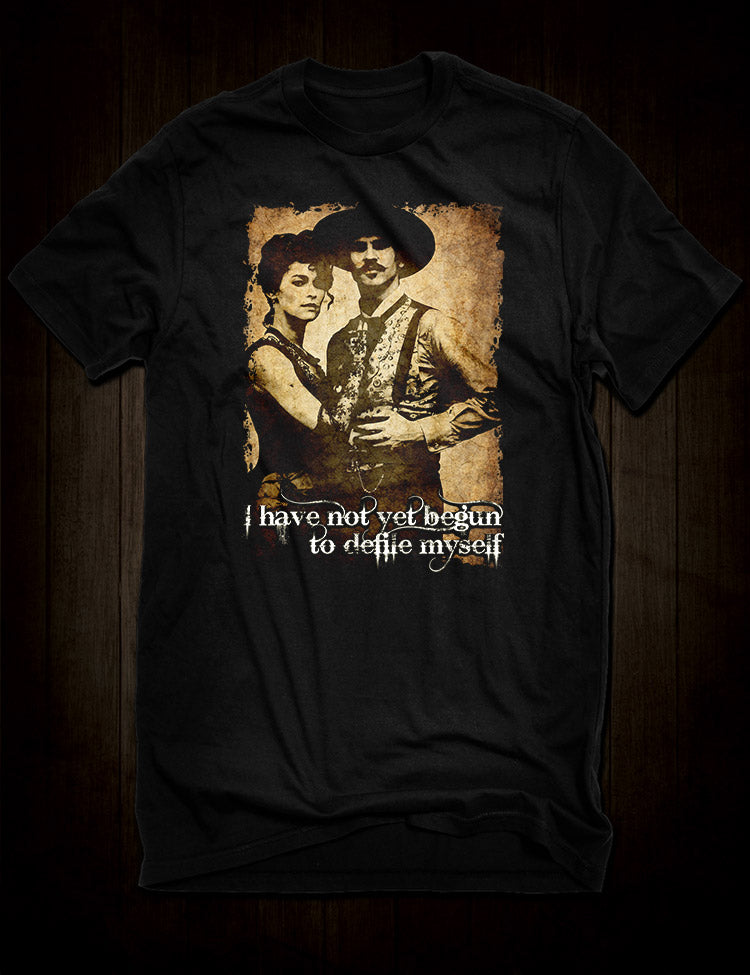
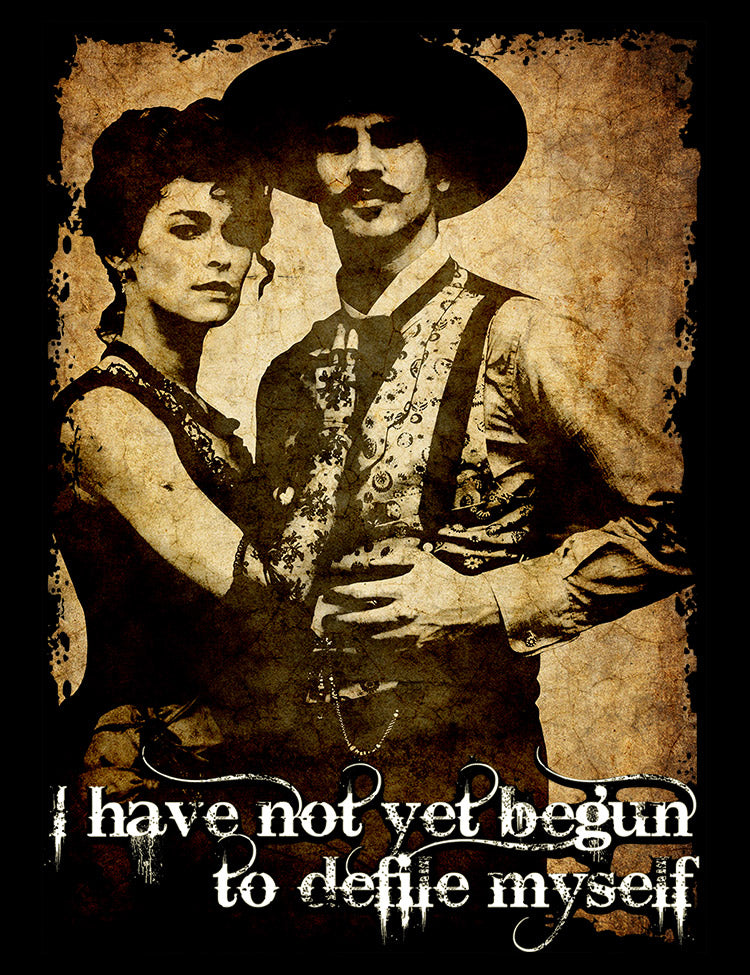
Hellwood's Johnny Ringo T-Shirt draws on the outlaw who gradually became more formidable in legend than the surviving record comfortably supports.

A Body Beneath an Oak
By July 1882, Ringo appears to have been drinking heavily.
The National Park Service records that he left Tombstone and was later seen intoxicated in the surrounding country. On 13 July, someone living near Turkey Creek heard a single gunshot. Ringo's body was discovered the following day.
The physical circumstances were peculiar but not inexplicable.
His horse had apparently escaped with his boots attached to the saddle, leaving Ringo to wrap cloth around his feet. The horse was subsequently recovered away from the death scene.
A coroner's jury concluded that Ringo had taken his own life.
Contemporary reporting broadly accepted the same explanation. One newspaper account stated that Ringo had previously threatened suicide and that acquaintances were not entirely surprised by his death.
For historians, this contemporary evidence matters considerably more than a good showdown scene.
Enter Wyatt Earp
The problem with frontier history is that eyewitnesses sometimes improved their memories.
Years later, Wyatt Earp was credited with versions of events in which he had personally killed Ringo. The claim fitted beautifully into the Earp vendetta narrative following the murder of Morgan Earp.
It fitted the calendar rather less neatly.
Earp had already left Arizona months before Ringo's death. Different versions of his alleged confession contain contradictory details, and the later literature surrounding Earp became notoriously tangled with embellished reminiscence.
Other suspects have included gunman Buckskin Frank Leslie and assorted enemies accumulated during Ringo's violent career.
Then there is Doc Holliday.
Modern audiences know the most satisfying version: Holliday secretly meets Ringo and kills him in a duel. It is magnificent Western drama. Historical evidence placing Holliday in Colorado around the relevant period makes it considerably less magnificent as documentary reconstruction.
Hellwood's John “Doc” Holliday T-Shirt and Wyatt Earp T-Shirt sit on the other side of a feud that popular culture has spent more than a century simplifying into heroes and villains.

How Suicide Became a Western Showdown
Ringo presents a familiar problem in Old West history.
The documented man was violent, troubled and dangerous enough. The legendary Ringo became something more useful: an almost aristocratic master gunfighter, perfectly equipped to stand opposite Wyatt Earp or Doc Holliday in the final act.
His unexplained final hours encouraged the transformation.
A lonely canyon, a revolver and a dead outlaw leave narrative space. Suicide provides an ending. Murder provides a mystery.
Unsurprisingly, popular culture chose the mystery.
The result is a story in which later recollections, Western films and frontier folklore are often repeated more confidently than the evidence surviving from 1882.
The Legend Under the Oak
There is no absolute way to reconstruct Johnny Ringo's final minutes.
But mystery should not make every explanation equally probable. The contemporary investigation ruled suicide, evidence exists for Ringo's deteriorating state beforehand, and the famous alternative killers come with serious problems of chronology or proof.
The more interesting question may therefore be why we keep trying to murder him.
Perhaps a celebrated gunfighter dying alone after a drinking binge feels insufficiently Western.
A final duel is cleaner. Somebody gets the last word.
History rarely provides that courtesy.
Explore more frontier fact, folklore and heavily embroidered reputation in Hellwood's Old West T-Shirt Collection.

JOHNNY RINGO T-SHIRT
A Hellwood tribute to the Cochise County outlaw whose documented career became inseparable from Tombstone mythology — and whose lonely death remains considerably more famous than the official verdict.