




James Randi vs Uri Geller: The Tonight Show Test That Became Paranormal History
Television loves a miracle. It loves one considerably less when somebody has checked the cutlery beforehand.
On 1 August 1973, Uri Geller appeared on The Tonight Show Starring Johnny Carson with the sort of reputation television producers dream about. The Israeli performer had become famous for demonstrations that appeared to involve telepathy and psychokinesis: hidden drawings divined, watches affected and, most memorably, metal spoons apparently persuaded to bend without the vulgar inconvenience of physical force.
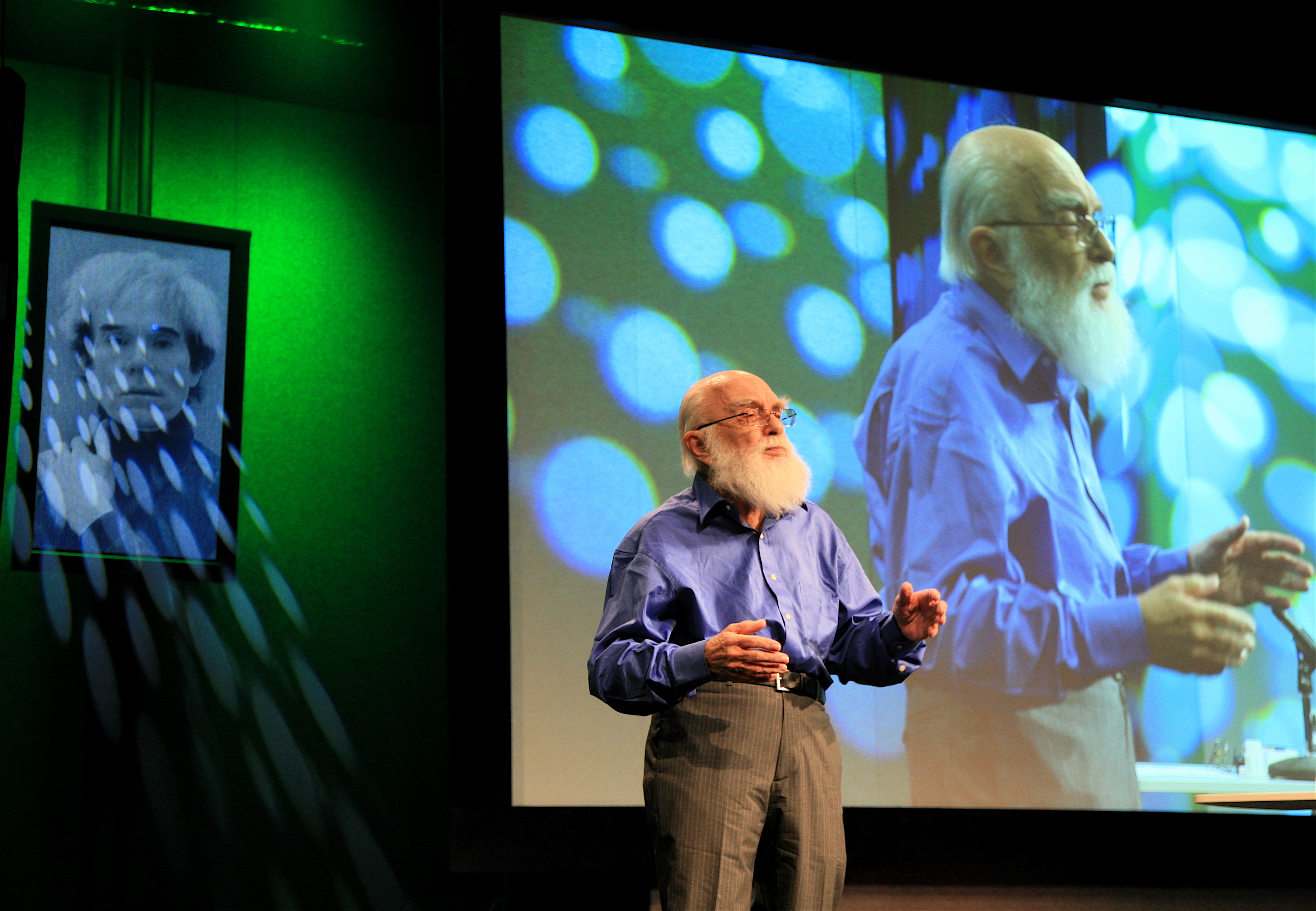
Waiting invisibly in the wings was another magician. James “The Amazing” Randi had spent years learning precisely how impossible things could be made to look perfectly convincing. The encounter between the two men became one of the defining episodes in modern paranormal scepticism.
It is also the story behind Hellwood’s Amazing Randi T-Shirt: a stage magician who eventually became more famous for investigating other people’s miracles than performing his own.
Johnny Carson Knew a Little About Magic
Carson was not an entirely innocent television host when Geller was booked. He had practised magic himself and approached claims of genuine supernatural ability with considerably more caution than a producer simply looking for a spectacular segment.
Before Geller appeared, Carson’s team consulted Randi. The crucial advice was beautifully unglamorous: control the props.
Rather than allowing Geller or his representatives access to the objects beforehand, the programme supplied and prepared its own. If nothing paranormal happened, there would at least be fewer opportunities for conventional conjuring methods to enter the equation.
Twenty-Two Very Long Minutes
The result was not the fireworks television might have expected.
Faced with objects he had not supplied or handled beforehand, Geller struggled to demonstrate the abilities for which he was becoming famous. He told Carson that he did not feel strong and appeared increasingly uncomfortable as the segment continued.
The obvious sceptical interpretation was devastating: remove control of the props and the psychic phenomena disappear. Yet the episode is more interesting than a simple television “gotcha”. A failed demonstration does not logically prove that every previous performance was fraudulent. What it did demonstrate was why experimental controls matter whenever an extraordinary effect might also be produced through ordinary deception.
Randi understood that problem from the inside. A scientist could be an expert in physics or psychology while knowing very little about palming, misdirection, concealed preparation or the dozens of tiny advantages a competent conjuror notices instinctively.
The Strange Randi-Geller Double Act
The Carson appearance did not destroy Geller’s career. Quite the opposite: the spectacle helped make him more famous. His spoon-bending demonstrations became a fixture of 1970s paranormal culture, while Randi increasingly became the man invited to explain how apparently impossible feats might be reproduced without supernatural powers.

The rivalry became oddly symbiotic. Nature later described Geller as one of Randi’s most enduring adversaries. Randi published The Magic of Uri Geller in 1975; Geller continued appearing before enormous audiences. Believer and sceptic became opposing characters in the same cultural drama.
Randi pushed the idea further with investigations such as Project Alpha, in which young conjurors Steve Shaw — later known professionally as Banachek — and Michael Edwards entered tests at a psychical-research laboratory while secretly using conventional magic techniques. Randi later revealed the deception, arguing that researchers needed safeguards designed with trickery in mind.
The Real Trick Was the Test
That may be the lasting significance of the Carson episode. It was not really about spoons.
Randi’s central argument was that investigating an extraordinary claim requires more than sincerity on either side. The conditions themselves have to remove mundane explanations before anyone starts reaching for supernatural ones. A magician was useful precisely because he spent his working life exploiting the gaps between what people see and what they think they have seen.
That philosophy eventually carried Randi far beyond television psychics. He investigated faith healers, homeopathy and other paranormal claims, and in 1988 joined Nature editor John Maddox and scientist Walter Stewart in examining Jacques Benveniste’s controversial “memory of water” experiments.
For more excursions into strange claims and stranger histories, browse Hellwood’s Occult T-Shirts, Conspiracy Theory T-Shirts and full collection of original designs.
Geller brought the mystery. Randi brought the controls. Johnny Carson supplied the television studio. And somewhere in the middle, an ordinary table full of spoons became a small landmark in the history of the paranormal.
THE AMAZING RANDI T-SHIRT
A tribute to the escapologist, magician and professional investigator who knew that the best place to look for the supernatural was usually just behind the curtain.