
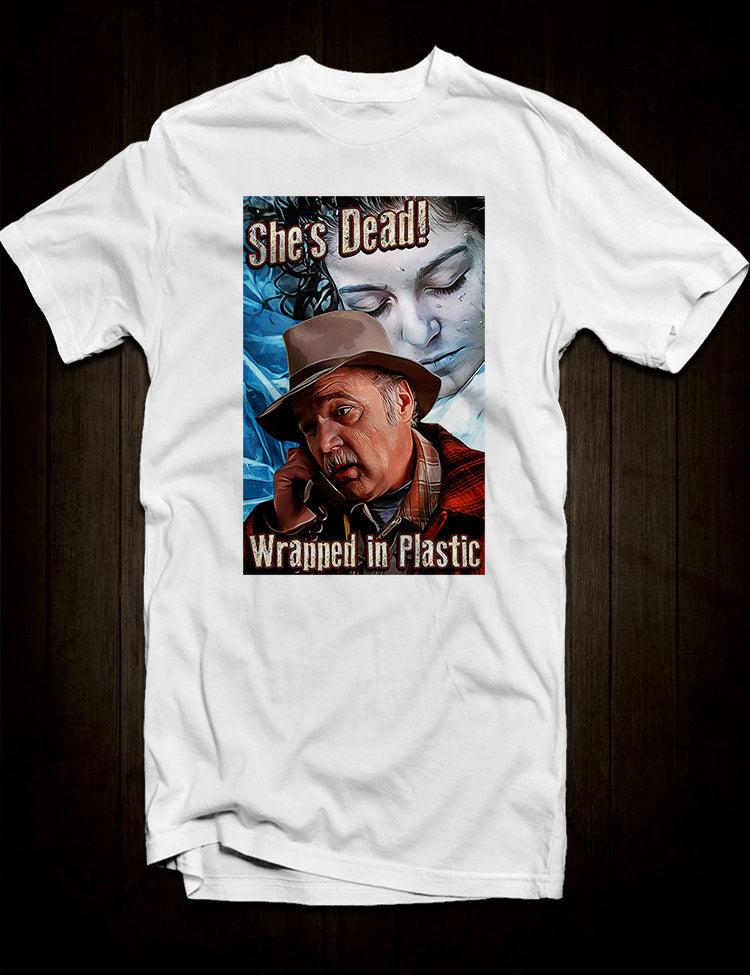
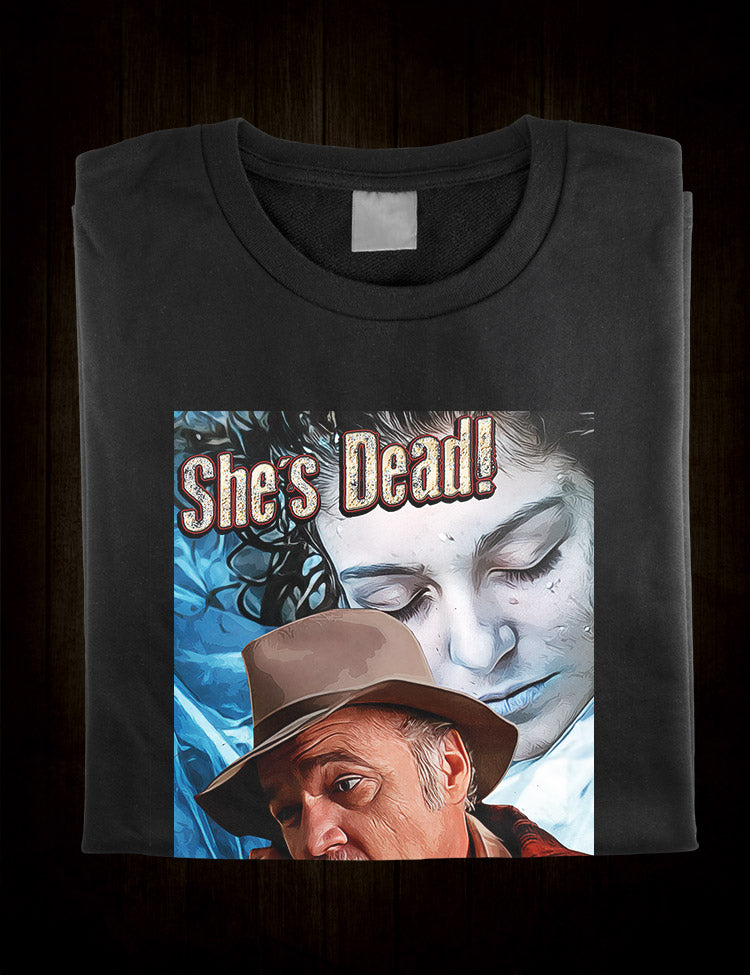
Twin Peaks - Wrapped In Plastic T-Shirt

TWIN PEAKS – WRAPPED IN PLASTIC T-SHIRT
A Small Town Secret, Sealed in Silence
It begins with a body. Washed up on the shore, pale as winter light, wrapped in plastic like something discarded, something hidden. That image alone rewired television forever. Twin Peaks, David Lynch and Mark Frost’s hypnotic descent into Americana’s underbelly, didn’t just tell a mystery. It created a mood, a mythology, a slow-burning sense that something was deeply, irreparably wrong beneath the pine-scented calm.
At the centre of it all is Laura Palmer. Homecoming queen. Golden girl. Dead before the story even begins, yet somehow more present than anyone else. Her absence becomes a presence, her life a labyrinth. Every character in Twin Peaks seems to orbit her, pulled in by secrets, lies, and fragments of truth that never quite settle into place. The town smiles, but the smile trembles.
Then there’s Dale Cooper, the sharply dressed FBI agent with a love of damn fine coffee and dreams that speak louder than evidence. He arrives as an outsider, a man of method and curiosity, only to find himself drawn into something stranger than any case file. Logic bends. Time slips. The investigation becomes less about solving a crime and more about understanding a place where reality itself feels unstable.
Twin Peaks thrives on contrast. Warm cherry pie and cold dread. Flickering neon and endless forest dark. Soap opera sincerity colliding with surreal horror. Lynch crafts a world where the ordinary becomes uncanny, where every conversation feels like it’s hiding something just out of reach. The famous phrase isn’t just a clue. It’s a tone-setter, a mission statement, a warning whispered through static.
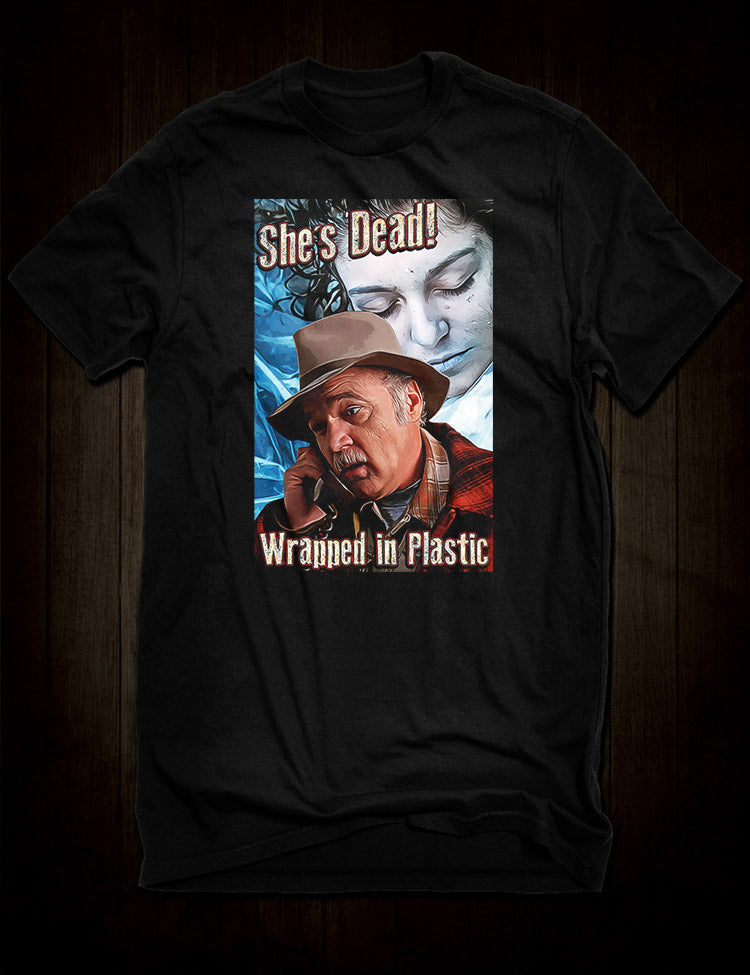
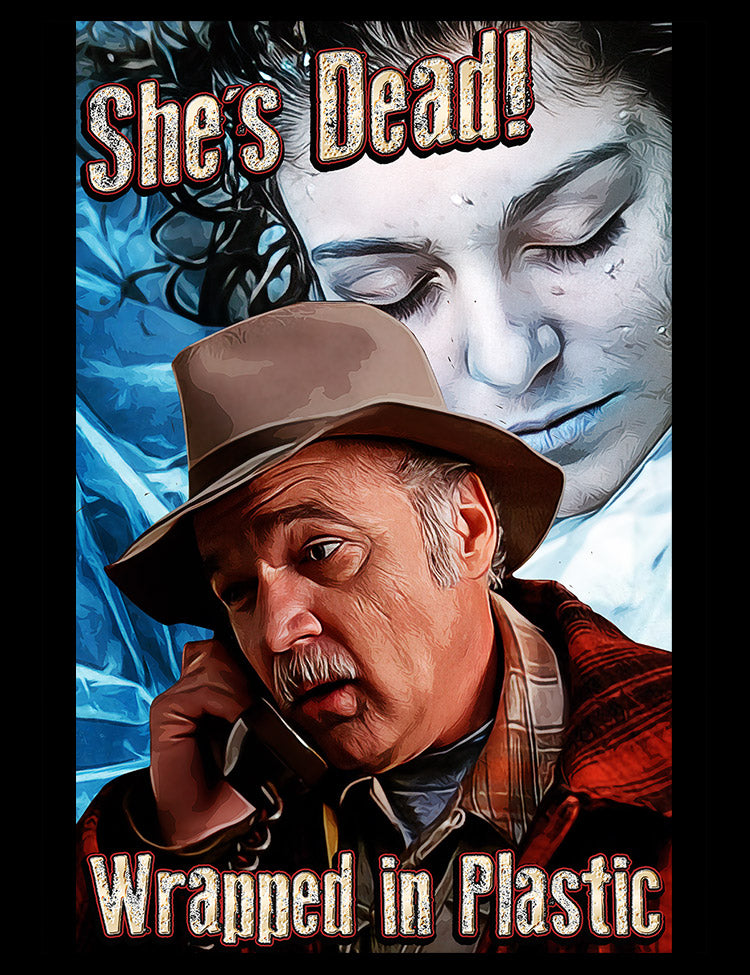
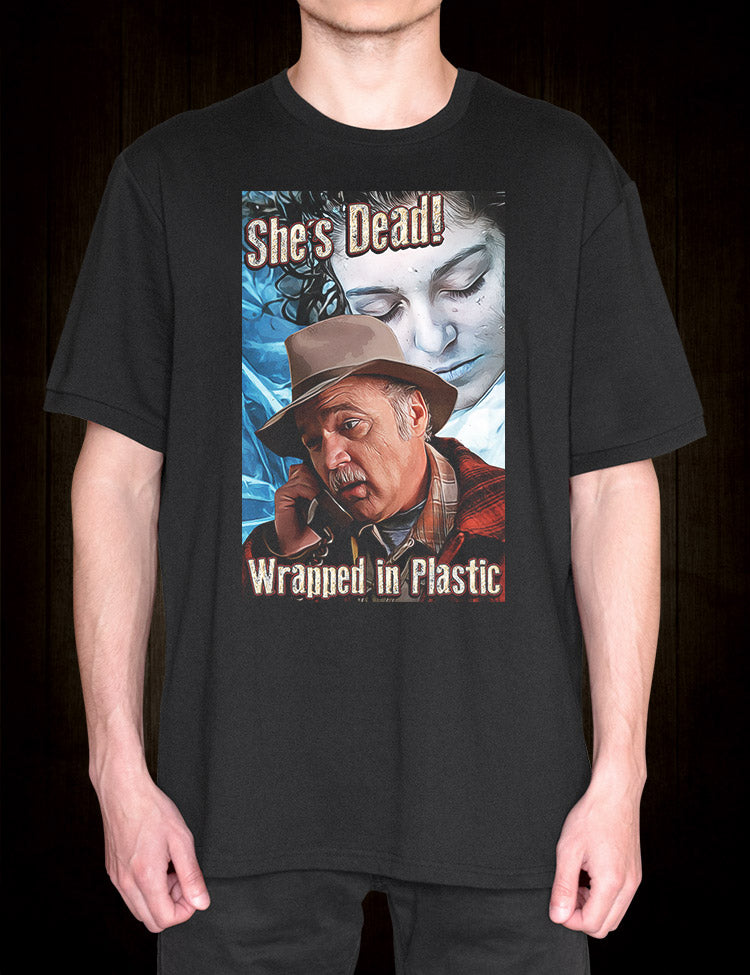
“She’s dead… wrapped in plastic.”
Those words echo through the series like a ghost refusing to rest. They reduce everything to a single, chilling fact while opening the door to something much larger and far more unknowable. Because in Twin Peaks, death is never just death. It’s a doorway. A signal. A fracture in the surface of reality.
This is a story that doesn’t resolve so much as deepen. The more you look, the less certain things become. Identities blur. Motives twist. The town reveals itself not as a place, but as a state of mind, one where beauty and horror exist side by side, inseparable. Laura Palmer may be gone, but Twin Peaks never lets her leave.
Plastic wrapped. Truth buried. And somewhere in the woods, something is still watching.
💬 FREQUENTLY ASKED QUESTIONS (FAQs)
Q1: Why is Laura Palmer so central to Twin Peaks despite being dead from the start?
A1: Laura functions as the emotional and narrative core of the series. Her life, secrets, and relationships ripple through every character and storyline, making her presence felt even in absence.
Q2: What makes Twin Peaks different from other mystery shows?
A2: It blends detective fiction with surrealism, dream logic, and psychological horror. The mystery is only part of the experience, with atmosphere and symbolism playing an equally important role.
Q3: What does “wrapped in plastic” represent in the show?
A3: It symbolises both concealment and exposure. Laura’s body is hidden, yet discovered, setting the tone for a story where secrets are buried but inevitably surface in disturbing ways.