





Death Wish T-Shirt

DEATH WISH T-SHIRT
When the Law Sleeps, the City Starts Talking in Gunfire
Night falls heavy over New York. Sirens echo, then fade. Streetlights flicker like tired witnesses. Somewhere in the silence that follows, a man makes a decision that cannot be undone. Not justice. Not quite revenge. Something colder. Something quieter. A line crossed without ceremony.
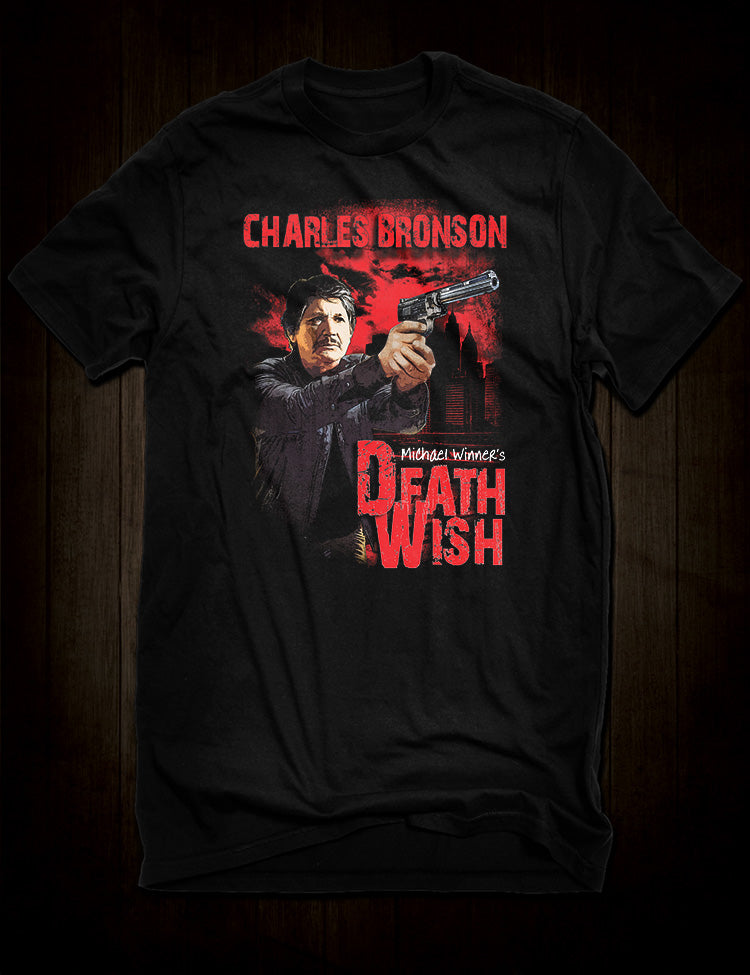
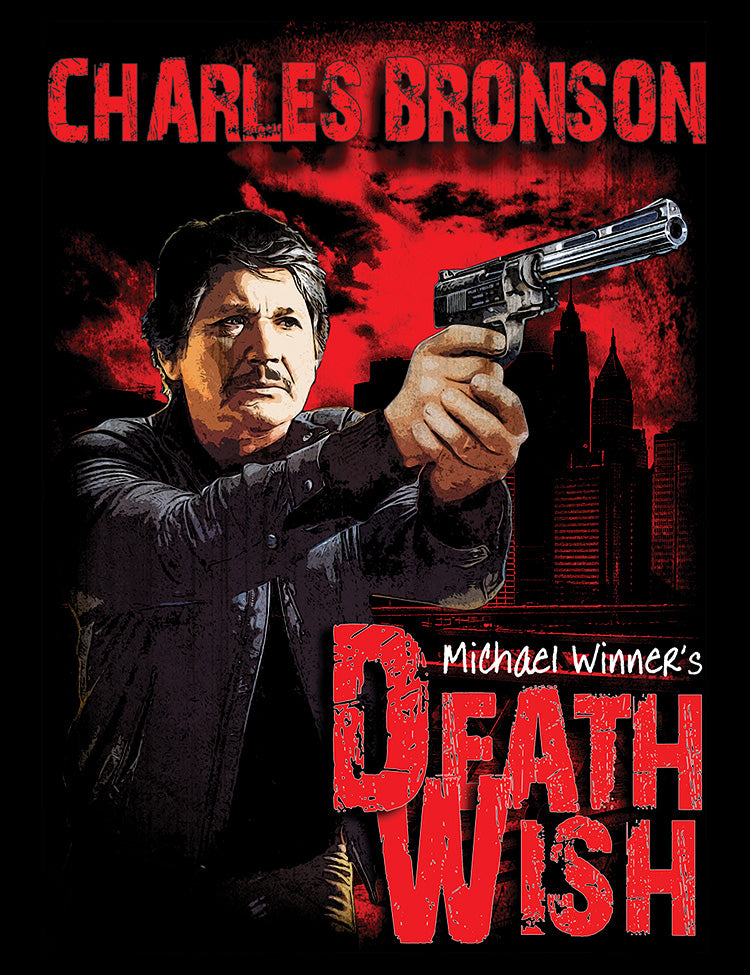
In Death Wish (1974), directed by Michael Winner and anchored by the granite presence of Charles Bronson, Paul Kersey begins as an ordinary man—an architect, a husband, a citizen who trusts the system. But when violence tears through his home, that belief fractures. What emerges is not a hero in the traditional sense, but a figure shaped by grief, fear, and a growing detachment from the rules that once defined him.
The film arrived at a time when urban anxiety bled into cinema screens, capturing a public mood steeped in uncertainty and unrest. Kersey’s transformation into a vigilante didn’t just drive the story—it sparked debate. Was he reclaiming control, or surrendering to something darker? The film never answers cleanly. Instead, it lingers in the grey space between order and chaos, where morality becomes a moving target.
“I believe a man should be able to walk the streets without being afraid.”
Bronson plays Kersey with an eerie restraint. No grand speeches. No theatrical rage. Just a slow recalibration of purpose, expressed through quiet routines and colder decisions. The city becomes his stage, each encounter another step away from who he was—and deeper into something harder to define.
Death Wish didn’t just reflect its era—it helped shape the vigilante archetype that would echo through decades of crime cinema. Controversial, confrontational, and impossible to ignore, it remains a film that challenges as much as it entertains.
Some stories ask what justice looks like. This one asks what’s left when it disappears.
💬 FREQUENTLY ASKED QUESTIONS (FAQs)
Q1: Why was Death Wish considered controversial when it was released?
A1: The film divided audiences and critics for its portrayal of vigilantism, with some viewing it as a reflection of public frustration with crime, while others saw it as endorsing extrajudicial violence and moral regression.
Q2: What defines Paul Kersey as a character within 1970s cinema?
A2: Kersey represents the “reluctant vigilante,” a figure shaped by personal trauma rather than ideology, embodying the era’s themes of disillusionment, urban fear, and the erosion of institutional trust.
Q3: How did Death Wish influence later crime and action films?
A3: It established a blueprint for vigilante narratives, influencing countless films that explore lone figures operating outside the law, from gritty urban thrillers to modern anti-hero driven action stories.