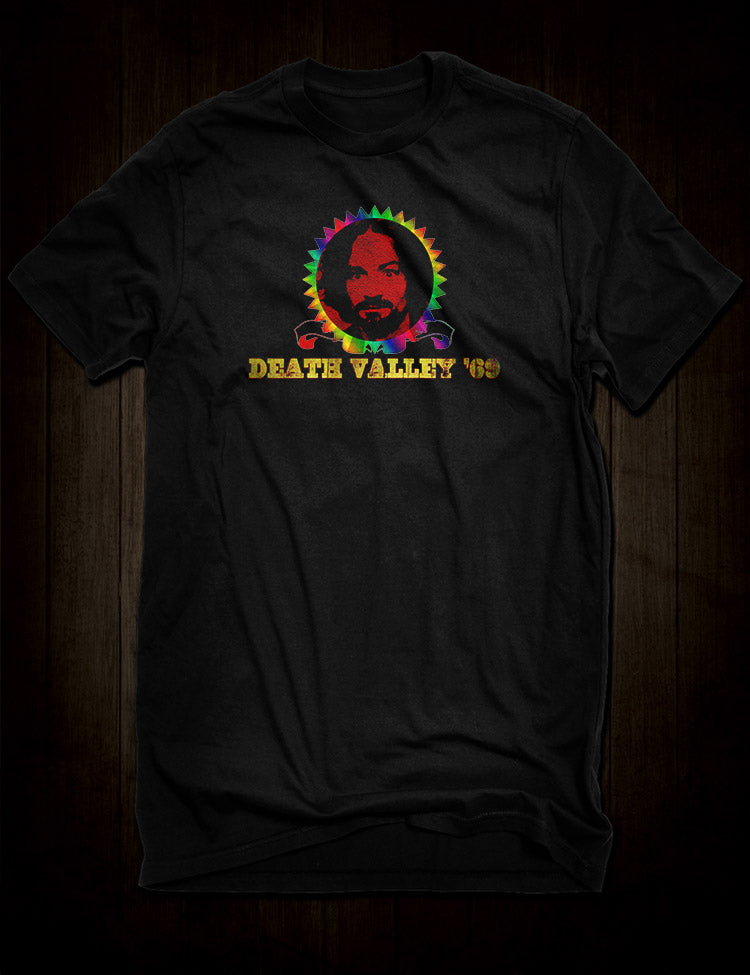

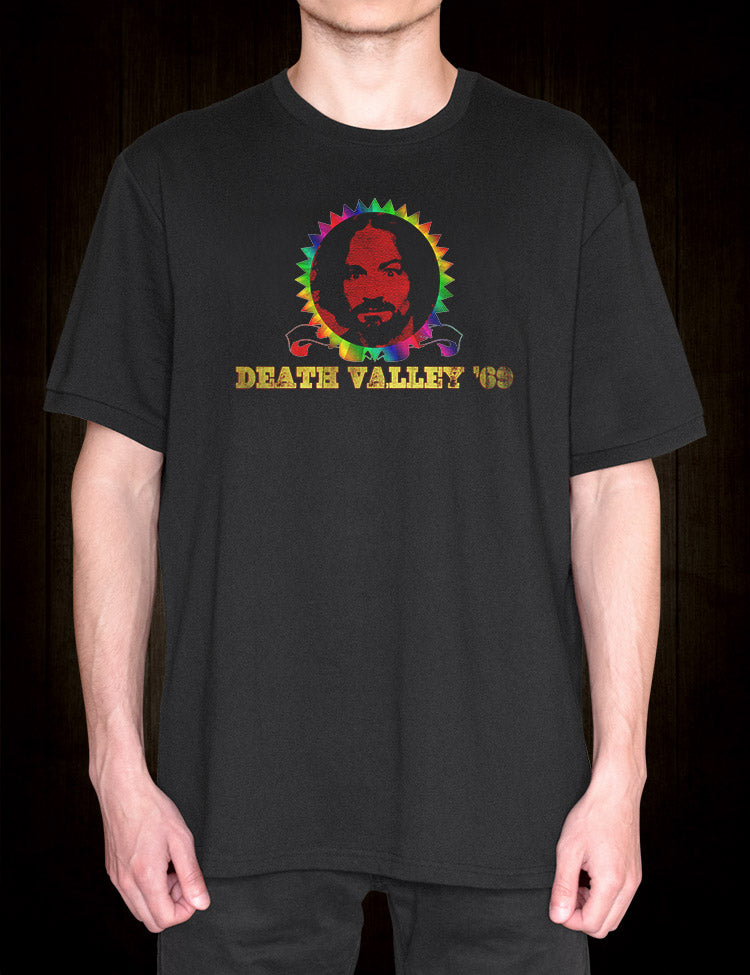

Death Valley '69 T-Shirt

DEATH VALLEY ’69 T-SHIRT
Desert dust, distorted guitars, and the echo of something America tried to forget.
Somewhere between scorched sand and static-soaked sound lies Death Valley ’69 — a phrase that doesn’t just sit quietly in history, it smoulders. It conjures the bleached brutality of the California desert and the dark cultural aftershock of one of the most infamous chapters in American crime: the Manson Family murders. A moment when the dream of the 1960s fractured, cracked open, and revealed something far more sinister lurking beneath the surface.
But this isn’t just history. It’s reinterpretation. Reverb. Reawakening. In 1985, Sonic Youth took that same haunted phrase and turned it into noise — a grinding, ghostly track featuring Lydia Lunch that felt less like a song and more like a séance. “Death Valley ’69” wasn’t about retelling events. It was about atmosphere. About dread. About the way violence lingers in the cultural bloodstream long after the headlines fade.
“I’m not afraid of anything… I’m not afraid of death.” — Charles Manson
The track arrived like a transmission from the edge — feedback screaming, vocals clashing, guitars unraveling in real time. It was no wave nihilism distilled into sound. A refusal to sanitise the past. A rejection of easy narratives. Sonic Youth didn’t explain Death Valley. They amplified it. Turned it into a sonic landscape where truth and myth blur, where the desert becomes a stage for something both real and unreal.
And that’s the legacy you’re stepping into here. Death Valley ’69 isn’t a place. It’s a pressure point in culture. A collision of true crime history, underground music, and 1960s counterculture collapse. It speaks to the moment innocence burned out and something colder took its place. A time when America stopped pretending everything was fine and started staring into the void.
Today, the echoes remain. In music that dares to disturb. In art that refuses to comfort. In stories that linger like heat rising from asphalt. This is the sound of the desert at night — vast, empty, and quietly menacing. A reminder that some moments don’t fade. They fossilise.
Step into the silence. Hear the distortion. Feel the fallout.
💬 FREQUENTLY ASKED QUESTIONS (FAQs)
Q1: What does “Death Valley ’69” refer to?
A1: It references the cultural and historical weight of 1969, particularly the Manson Family murders in California, alongside the symbolic setting of Death Valley as a stark, desolate landscape tied to themes of isolation and भय.
Q2: What is the significance of the Sonic Youth song “Death Valley ’69”?
A2: Released in 1985, the song channels the lingering psychological impact of the Manson era through dissonant guitars and haunting vocals, capturing mood and menace rather than recounting events directly.
Q3: Why does 1969 remain such a powerful cultural reference point?
A3: 1969 marked a turning point where the optimism of the 1960s gave way to darker realities, with events like the Manson murders symbolising the end of the counterculture’s innocence.