
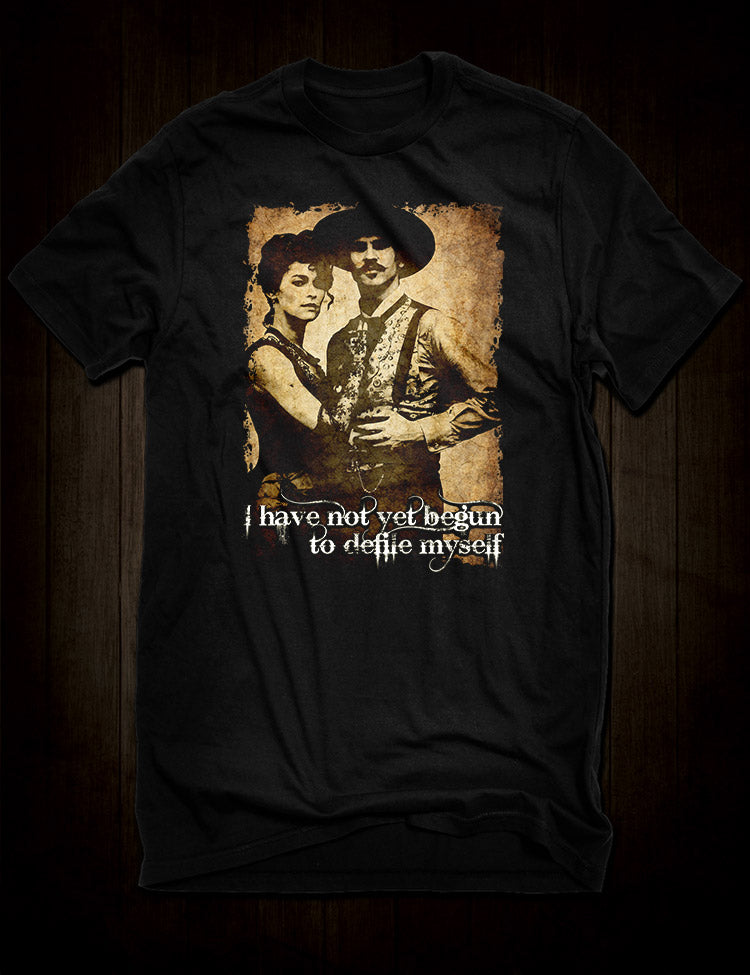



Chinatown - JJ Gittes T-Shirt

CHINATOWN JJ GITTES T-SHIRT
Sun-Bleached Glamour, Sewer-Deep Corruption
Los Angeles has rarely looked so seductive or so sick. Chinatown arrives in a shimmer of tailored suits, expensive smiles, dry riverbeds, and civic ambition, then slowly reveals a city built on theft, power, and old evil wearing respectable cologne. At the centre of it all stands J.J. Gittes, Roman Polanski’s immaculately dressed private eye, played by Jack Nicholson with the kind of sly intelligence that feels half charm, half warning. He’s a man who thinks he understands dirt because he makes a living digging it up. Then he stumbles into something far darker than adultery and snapshots.
That is what makes Gittes endure. He is not a superhero detective or a swaggering pulp machine. He is sharp, watchful, witty, vain, and vulnerable, a man who knows how to read a room but cannot quite grasp the scale of the rot spreading underneath the whole city. In classic noir fashion, every answer opens another trapdoor. Water rights become political warfare. Family wealth curdles into moral horror. Los Angeles itself becomes a mirage, all sunlight on the surface and poison in the pipes below. The result is one of the greatest neo-noir films ever made, a picture that takes the hardboiled detective tradition and leaves it bruised, bloodied, and blinking in the California glare.
Gittes is unforgettable partly because he carries his damage in plain sight. The famous bandaged nose is not just an iconic visual. It is the film’s little white flag of humiliation, pain, and persistence, the look of a man who has pushed into territory where powerful people would rather he vanished. Nicholson plays him with immaculate rhythm, throwing off dry lines one moment and registering genuine dread the next. He is cool until he isn’t, confident until the ground gives way. That tension is the whole dark heartbeat of Chinatown.
The film’s reputation has only grown because it understands something ugly and eternal: institutions do not merely fail, they protect themselves. Gittes can uncover facts, chase leads, and claw his way toward the truth, but truth is not the same thing as justice. That bitter distinction gives the film its lasting sting. It also makes J.J. Gittes one of the essential figures in American cinema, a detective moving through a city of sunlit deception, trying to stay upright while everything noble buckles around him.
As the film itself puts it, “Forget it, Jake. It’s Chinatown.” That line lands like a coffin lid. It is resignation, warning, and worldview all at once.
Chinatown does not fade out so much as leave a bruise. Gittes walks straight into that bruise and never really comes back out. Sharp hat. Split lip world. Case closed, soul open.
Includes optional backprint.
💬 FREQUENTLY ASKED QUESTIONS (FAQs)
Q1: Why is J.J. Gittes considered such an important detective character?
A1: Because he updates the classic noir private eye for a more cynical age. He has the wit, wardrobe, and instinct of old-school screen detectives, but Chinatown places him in a world where intelligence is not enough and morality offers no armour. That tragic limitation is what makes him feel so human.
Q2: Why does Chinatown still feel so powerful decades later?
A2: It pairs a perfect noir mystery with themes that never age well because society keeps repeating them: corruption, land grabs, elite impunity, and the collapse of faith in institutions. It is elegant on the surface and merciless underneath, which gives it that long aftertaste of dread.
Q3: What does the title Chinatown really suggest in the film?
A3: It points to a place, but more importantly to a condition of helplessness. For Gittes, Chinatown represents confusion, moral fog, and the knowledge that intervention can make things worse. By the end, it becomes the film’s bleak philosophy in one word.