





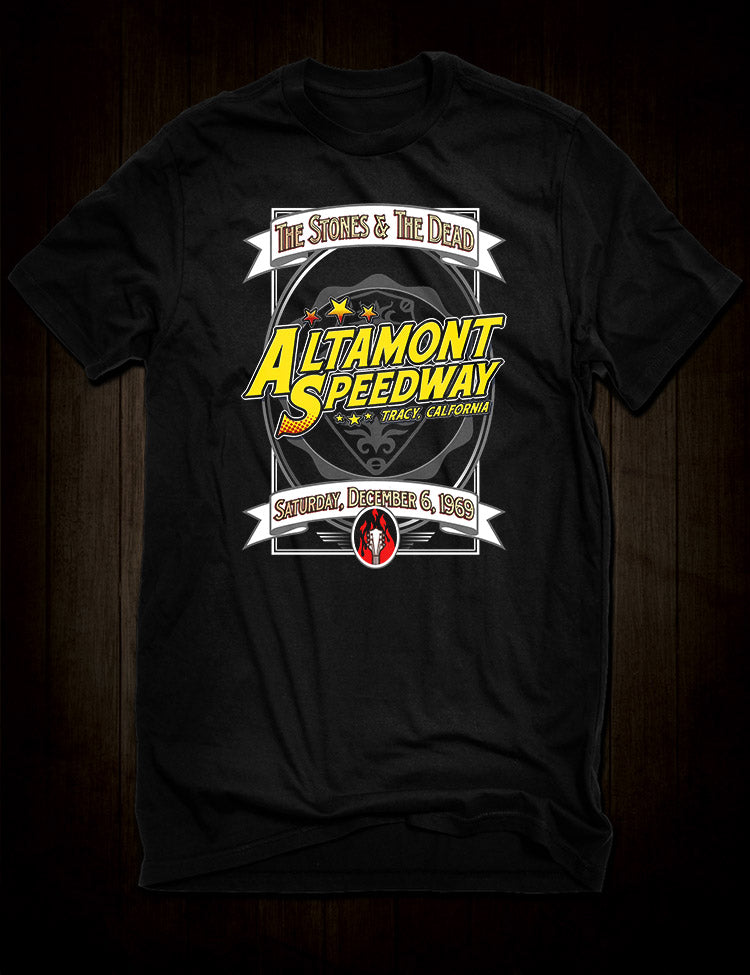


Altamont Speedway T-Shirt

ALTAMONT SPEEDWAY T-SHIRT
A classic rock t-shirt available in black cotton.
On December 6, 1969, the dream cracked. The Altamont Free Concert, staged at Altamont Speedway in California and headlined by The Rolling Stones, was meant to be a West Coast answer to Woodstock — a free concert, a communal gesture, a victory lap for the counterculture. Instead, it became a brutal punctuation mark at the end of the 1960s, where optimism collided with chaos in full public view.
What unfolded that day has been replayed, dissected, and mythologised for decades. A volatile mix of poor planning, bad decisions, and rising tension turned the event into something darker and more symbolic than any single tragedy. The music played on, but the atmosphere shifted. Idealism gave way to unease. Freedom revealed its cost. Captured unflinchingly in Gimme Shelter, Altamont entered history not just as a concert, but as a cultural reckoning — the moment when the era’s rhetoric of peace and love met the reality of disorder, violence, and consequence.
“You can’t always get what you want.” — The Rolling Stones
Altamont’s power lies in what it represents. It wasn’t the end of rock ’n’ roll, but it was the end of innocence. The counterculture learned that scale changes everything, that movements fracture under pressure, and that mythology doesn’t protect you from reality. In hindsight, Altamont feels inevitable — the dark mirror to the decade’s brightest promises.
The Altamont Speedway T-Shirt is a Hellwood tribute to that moment of rupture. For those who understand that history isn’t just triumphs and anthems, but fractures, failures, and the uncomfortable truths that shape what comes next.
Not the end of the music. The end of the illusion.
💬 FREQUENTLY ASKED QUESTIONS (FAQs)
Q1: What was the Altamont Free Concert?
A1: A free rock concert held in California in December 1969, headlined by The Rolling Stones, intended as a celebration of counterculture ideals.
Q2: Why is Altamont historically significant?
A2: Events at the concert exposed the fragility of 1960s idealism and became widely viewed as symbolising the end of the decade’s utopian vision.
Q3: How is Altamont remembered today?
A3: As a cultural turning point — a moment where music, politics, and reality collided, reshaping how the era is understood.