

The Psychology of Graphic Tees: What Your T-Shirt Says About You

THE PSYCHOLOGY OF GRAPHIC TEES
There’s something deceptively simple about a graphic T-shirt.
A rectangle of fabric. A splash of ink. A slogan, a face, a symbol. But a graphic T-shirt is never just a graphic T-shirt.
At least, not if it’s doing its job properly.
It might look like nothing more than cotton, ink, and a good decision made half-awake at midnight, but the truth is a little stranger. A graphic tee is a signal. A badge. A broadcast tower stitched into a sleeve seam. It tells the world what fascinates you, what repels you, what shaped you, and which corners of culture you’d rather haunt than leave behind. It’s a walking billboard for identity. A silent manifesto. A wearable whisper that says, “This is who I am… or at least who I’d like you to think I am.”
In a world drowning in algorithm-fed sameness, graphic tees have become one of the last raw, immediate ways to signal personality, tribe, taste, and even rebellion. Whether it’s a faded cult film reference or an obscure lyric that only three people in the pub recognise, what you wear on your chest speaks volumes.
Which means the graphic tee is no longer just casualwear. It’s autobiography with a collar.
And the kind of T-shirt you wear says more about you than most people realise.

1. The Identity Shortcut: Clothing as Instant Communication
Humans are wired for snap judgments. Within seconds of seeing someone, we start building a mental profile. Graphic tees accelerate that process.
A single image can instantly communicate:
-
Taste (films, music, literature)
-
Values (rebellion, humour, irony)
-
Subculture (punk, noir, horror, outsider)
-
Intelligence or depth (or at least the suggestion of it)
It’s social shorthand.
Wearing a generic logo says, “I bought a shirt.”
Wearing something obscure says, “I chose this for a reason.”
That selection matters. It tells people whether you’re the sort of person who reaches for something generic, or the sort who’d rather wear a reference only five people in the room will understand.
That is where personality starts showing through.
If your shirt nods to cult cinema, underground literature, or outsider icons, it tells people that your taste wasn’t assembled by committee. It was discovered, collected, and chosen.

2. The Tribe Signal: Finding Your People Without Speaking
The best graphic tees work like secret handshakes.
A reference to a forgotten film.
An obscure lyric.
A bleak little literary in-joke.
A design that would mean absolutely nothing to most people, but everything to the right person.
That recognition has power.
Someone catches the reference on your shirt and suddenly there’s a flicker of connection. Not because you’re both wearing the same trend, but because you both passed the same strange alleyway in culture and decided it was worth lingering there. This is tribal psychology at work. We are constantly scanning for signals that someone belongs to our “group,” however loosely defined. Graphic tees act as low-risk social beacons.
And the more niche the reference, the stronger the signal.
Anyone can recognise a mass-market logo. It takes a certain kind of person to clock a shirt inspired by Inland Empire, Exorcist III, or a piece of dark literary debris and immediately know they’ve found one of their own.

3. The Rebellion Factor: Rejecting the Mass-Market Machine
Let’s be honest—people are tired of bland. There’s a reason people are drifting away from cookie cutter, disposable graphic design. Large parts of modern fashion have become airless: repeated motifs, safe slogans, algorithm-approved aesthetics, and the same five references endlessly recycled until they lose all voltage.
The modern retail landscape is flooded with:
-
Copy-paste designs
-
Safe slogans
-
Algorithm-approved aesthetics
Graphic tees, especially niche ones, are often a reaction against that.
Wearing something unusual says:
I do not want what everyone else has.
It’s subtle rebellion. Not loud. Not performative. Just a quiet refusal to blend into the grey mass of “acceptable taste.” The kind of refusal that doesn’t need to announce itself because it’s already visible.
This is where independent brands and outsider labels win. They offer something a generic high-street tee rarely can: identity with edges still on it.
And in 2026, that’s more valuable than ever.
4. The Irony Layer: Some Tees Are Worn Straight. Others Are Worn with a Smirk.
Not every graphic tee means exactly what it appears to mean.
Some are earnest. Some are ironic. Some sit in a murky little middle ground where tone becomes the whole game.
That ambiguity is part of their appeal. People don’t just see the shirt—they try to decode it. And this layered meaning adds depth. It creates intrigue. That’s where personality lives.
A deadpan slogan can become funnier depending on who wears it. A dark design can read as taste, humour, provocation, or all three at once. A literary or cinematic reference might be a tribute, or it might be a deliberately awkward signal meant to puzzle anyone with a more obvious wardrobe.
People are drawn to this layered quality because it creates intrigue. It gives clothing subtext.
A good tee does not simply announce. It invites interpretation.
That’s why graphic shirts tend to outlast trend-led basics in people’s wardrobes. They aren’t just functional. They’re expressive objects. They carry tone. They help the wearer construct a persona, whether that persona is sincere, guarded, sardonic, romantic, bleak, weird, or gloriously difficult to classify.

5. The Nostalgia Trigger: Wearing Memory Like Armour
Certain designs don’t just represent taste—they represent time, they let people wear their memories in public.
Not all nostalgia is soft-focus comfort. Sometimes it’s jagged. Sometimes it’s a song lyric you heard in the wrong year of your life. Sometimes it’s a film you watched too young and never properly recovered from. Sometimes it’s a television face, a paperback, a crime story, or a band that attached itself to you and never let go.
Graphic tees can function like emotional anchors. It doesn’t merely look good. It activates memory. It says, this mattered to me. And because clothing is public, it also says, this still matters to me enough to wear. They let you carry fragments of your past into the present. Not in a loud, sentimental way—but in a quiet, coded form.
That’s why vintage and retro aesthetics hit so hard. They’re not just visual—they’re psychological time machines.

6. The Intellectual Flex (Without Saying a Word)
Let’s be honest: sometimes a shirt is also a test. Not in an obnoxious way. Just enough to separate passive recognition from active knowledge.
Some tees are chosen specifically because they signal:
-
Knowledge
-
Cultural awareness
-
Depth
A reference to a mainstream classic tells people what you like. A reference to something more obscure tells people how deep you’ve gone. It hints at curiosity, research, memory, and taste that didn’t stop at the surface. A reference that isn’t immediately obvious creates a kind of soft challenge:
“If you know, you know.”
It’s not arrogance. It’s curation.
That is part of the appeal of literary tees, cult-film designs, and niche music shirts. They reward people who know what they’re looking at.
In a culture where everything is instant, broad, and flattened for maximum reach, there is something satisfying about wearing a reference that resists immediate understanding. It creates a slight delay in the reader. A pause. A second look.
That second look is where the fun begins.
A shirt inspired by The Secret History, Nick Drake, or a genuinely odd film property doesn’t need to explain itself. It simply waits. The right audience will arrive.
7. The Dark Aesthetic: Why People Are Drawn to the Unsettling
Horror, noir, true crime, occult imagery, doomed glamour, moral collapse, beautiful sleaze, cinematic dread. These themes survive because they speak to something deeper than novelty.
They tap into something deeper:
-
Curiosity about the forbidden
-
Fascination with the macabre
-
Attraction to the unknown
People are often drawn to unsettling imagery not because they are trying to shock, but because these subjects feel charged. They carry atmosphere. They suggest that the wearer is interested in more than safe, polished surfaces. Wearing these themes doesn’t mean someone is morbid. It means they’re comfortable exploring the edges.
It signals a personality that isn’t afraid of discomfort, ambiguity, or shadow.
The psychology here is simple enough: people often use clothing to explore parts of themselves they can’t express as directly anywhere else. A dark graphic tee becomes a controlled way of showing attraction to mystery, tension, danger, irony, or the macabre.
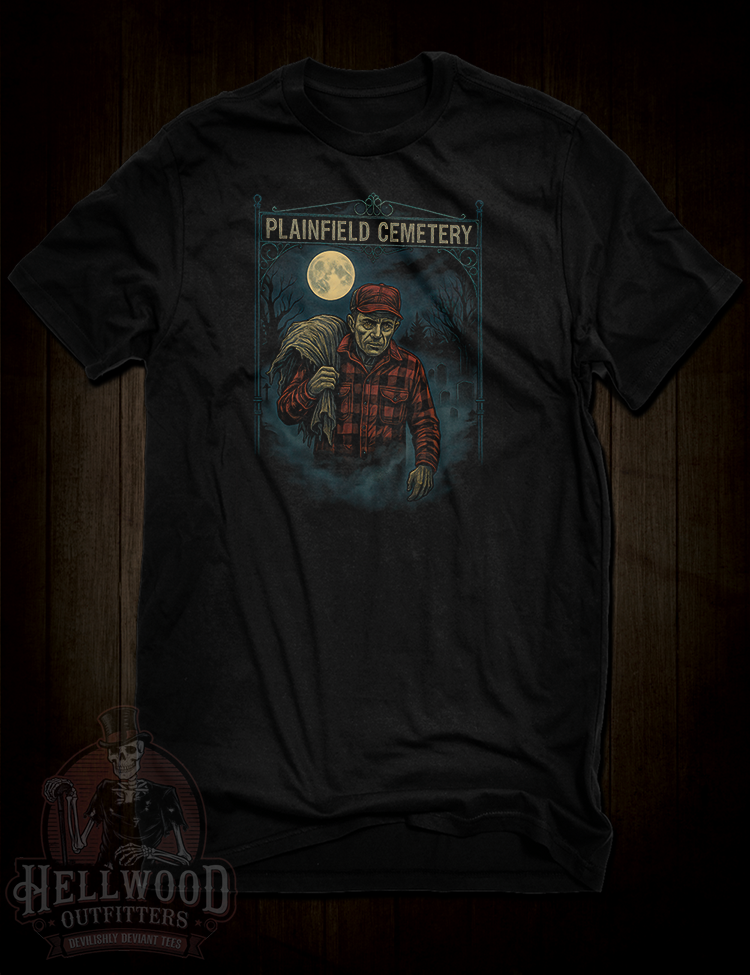
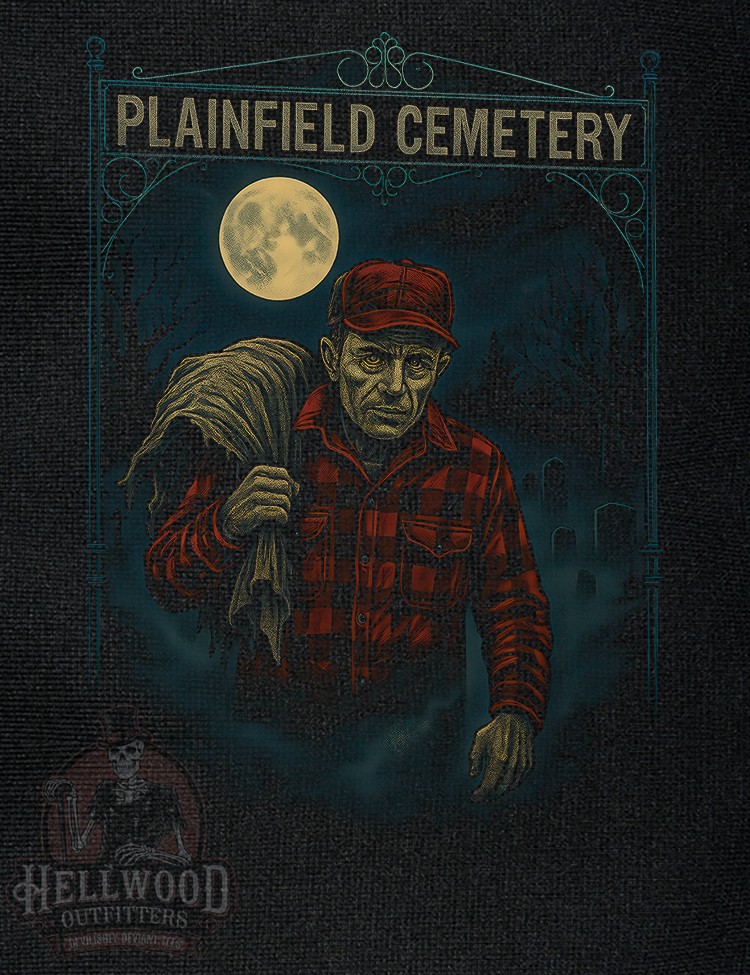
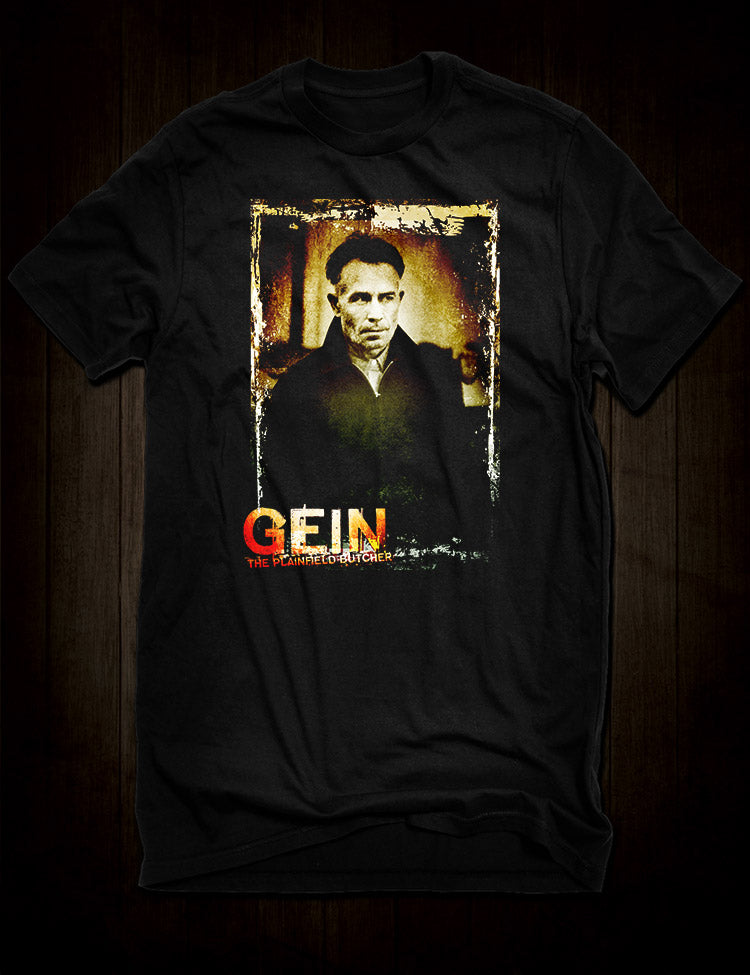
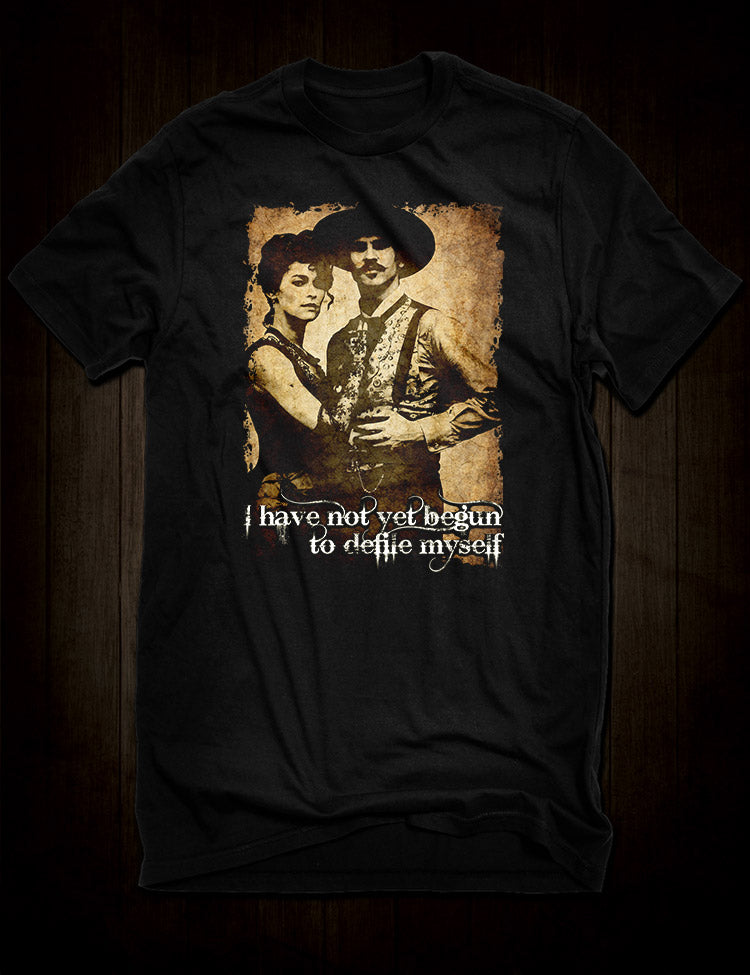
Hellwood lives comfortably in this territory. That’s part of the appeal. These aren’t cheerful wallpaper designs. They're serial killers and cult leaders, the occult and the dangerous. They have a pulse. Sometimes it’s a nervous one.
And let’s face it—that’s far more interesting than safe optimism printed in pastel.

8. The Anti-Brand Movement: People Want Story Now, Not Just Branding
For years, big fashion sold status through logos. Huge ones. Obvious ones. Expensive ones. The point was not expression so much as affiliation.
But the tide has shifted.
More people now want:
-
Story over status
-
Meaning over branding
-
Identity over affiliation
Graphic tees—especially independent, niche designs—offer that.
A graphic tee with actual cultural texture behind it offers something richer. It says:
-
I care about this subject
-
I have a relationship with this reference
-
I’d rather wear a story than an advert
They don’t say, “I bought this.”
They say, “This represents something.”
That’s a fundamental psychological shift.
That’s one of the reasons independent brands with strong curatorial instincts can punch above their size. They’re not just selling shirts. They’re selling signals, fragments, fascinations, obsessions, and beautifully strange breadcrumbs from culture’s darker pantry.
9. Graphic Tees Start Conversations, and End the Wrong Ones
The practical magic of a good T-shirt is that it acts as a filter. A good graphic tee can do one of two things:
It can invite exactly the conversation you want:
“Where did you get that?”
“Is that a reference to…?”
“I’ve never seen anyone with a shirt like that.”
And it can also gently discourage the conversations you don’t want. Because people who don’t get it often pass right by, which is its own small reward.
Your clothing becomes a kind of social filter—attracting the right interactions while quietly repelling the wrong ones.
That’s useful. Efficient, even.
Clothing has always been social communication, but graphic tees sharpen the signal. They help attract the right kind of attention, whether that means fellow obsessives, curious strangers, music nerds, horror heads, or one lone person in a bar who instantly understands the shirt and, by extension, something about you.
A good tee does not just decorate the body. It edits the room.

10. The Final Truth: You’re Curating a Character
Whether consciously or not, everyone is building a version of themselves.
Sometimes that version is highly polished. Sometimes it is accidental. More often it’s a mix of instinct, habit, aspiration, and a few recurring symbols that start to harden into a personal mythology.
Graphic tees are part of that construction.
They can reflect who you are now.
They can point backward to who made you.
They can hint at the person you’re still becoming.
That is why they endure. They’re not merely garments and they’re not just trend pieces. They are portable clues. They let you carry your references, your loyalties, your sense of humour, your darkness, your nostalgia, and your private canon with you into the day.
And when the design is right, they do all of that without saying too much.
Just enough.
What Hellwood Tees Say
Hellwood Outfitters has never really been about generic graphics or easy consumption. The whole current runs in the opposite direction: cult cinema, strange literature, dark history, outsider music, British oddities, low-lit glamour, beautiful bad taste, and references with enough voltage to mean something.
That’s why a Hellwood tee tends to function differently from a standard graphic shirt.
It doesn’t just say, I like this thing.
It says something closer to:
-
I collect the unusual.
-
I prefer the margins to the middle.
-
I want story, not sludge.
-
I’d rather wear a reference than a logo.
-
I know exactly why I chose this.
Or maybe it just says:
“I saw this. I felt something. I kept it.”
And honestly? That’s enough.
That, in the end, is the real psychology of the graphic tee.
It is not about getting dressed.
It's not for everyone.
But then again… that’s the point.