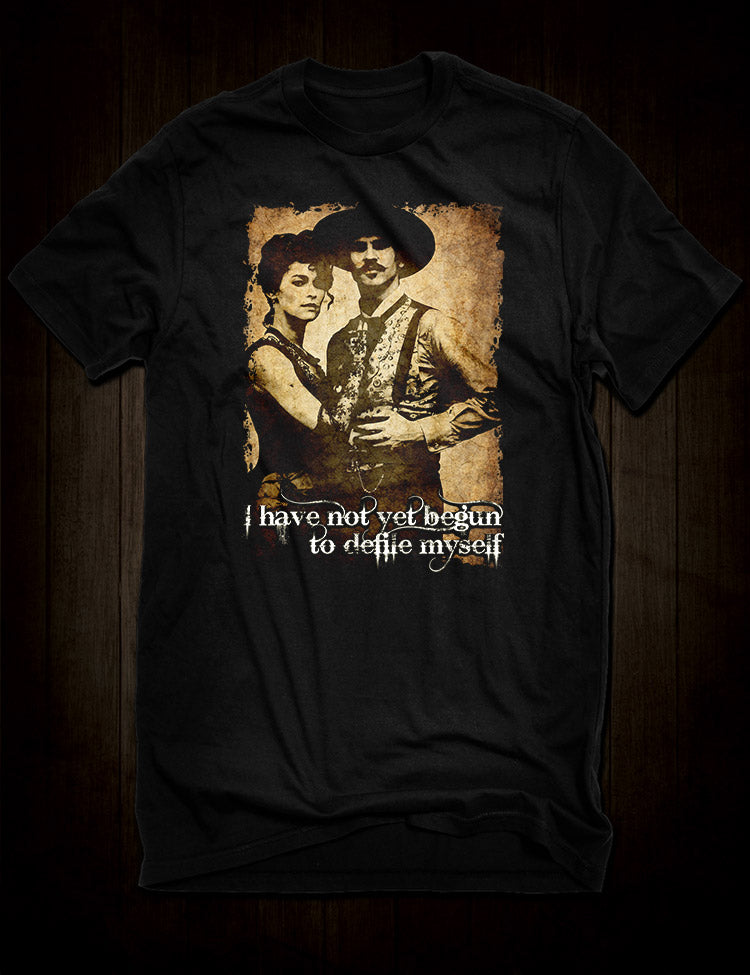
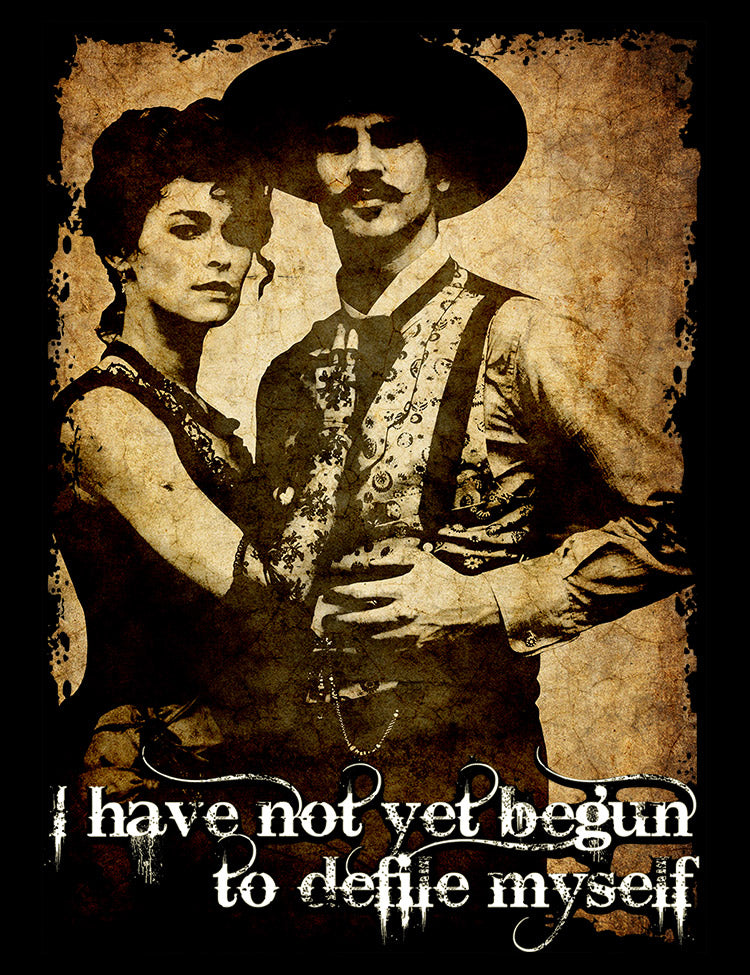


Belle Starr T-Shirt

BELLE STARR T-SHIRT
The Outlaw Queen of the Indian Territory
Belle Starr entered American folklore wearing velvet, feathers and a pair of pistols, but separating the woman from the legend has never been particularly easy. By the time of her violent death in 1889, newspaper writers had already begun turning her into something larger than life: an outlaw queen who rode with some of the most notorious criminals of the post-Civil War West. The reality was more complicated, and considerably more interesting.
Born Myra Maybelle Shirley in Carthage, Missouri, in 1848, Starr grew up in a relatively prosperous family. The Civil War transformed the border country around Missouri and Arkansas into a violent landscape of divided loyalties, guerrilla warfare and personal vendettas. Among those operating in this world were men who would later become famous outlaws, including Jesse James, Frank James and members of the Younger family. Starr's own family connections placed her close to the same social circles from which several of these figures emerged.
After the war she married Jim Reed, a former Confederate guerrilla who became involved in criminal activity. Reed was killed in 1874, leaving Starr with two children and an increasingly colourful reputation. Her subsequent relationships continued to connect her with the outlaw culture of the region, but it was her marriage to Sam Starr in 1880 that supplied the surname by which history would remember her.
Sam was a Cherokee man whose family lived in Indian Territory, in what is now Oklahoma. Belle settled with him around Younger's Bend, a remote property on the Canadian River. Stories soon circulated that the Starr home served as a refuge for horse thieves, fugitives and other wanted men. Some claims were undoubtedly embellished by newspapers, but Belle and Sam did attract the attention of federal authorities operating from Fort Smith, Arkansas.
In 1883 Belle and Sam Starr were convicted of horse theft before the federal court of Judge Isaac C. Parker. Both received prison sentences and served time at the Detroit House of Correction. Belle's encounters with Parker's court helped cement the image of the formidable female outlaw who supposedly treated arrest and prosecution as occupational inconveniences.
The press eagerly supplied everything else. Reports described Starr riding sidesaddle in black velvet, carrying pistols and associating freely with wanted men. Later dime novels and popular histories expanded the mythology until she became one of the defining female figures of the Old West, despite there being far less evidence for some of her supposed exploits than the legend suggests.
Sam Starr was killed in a gunfight in 1886. Belle remained at Younger's Bend and later became involved with Jim July Starr, another member of the extended Starr family. Her own life ended abruptly on 3 February 1889, two days before her forty-first birthday. While riding home near Eufaula in Indian Territory, she was ambushed and shot. Several possible suspects emerged, including neighbours, associates and members of her own family circle, but nobody was convicted of the murder.
That unresolved ending proved irresistible to the storytellers who followed. Belle Starr became the subject of biographies, pulp histories, films, television programmes and countless variations on the outlaw legend. Like many figures of the nineteenth-century frontier, the historical person gradually became inseparable from the character created around her.
The enduring fascination lies somewhere between those two versions. Myra Maybelle Shirley was unquestionably connected to the violent criminal world of the post-war frontier and was herself convicted of horse theft. Belle Starr, the flamboyant pistol-carrying “Bandit Queen” of popular culture, was partly the creation of journalists and later mythmakers. Together they produced one of the most persistent legends of the American West.
💬 FREQUENTLY ASKED QUESTIONS (FAQs)
Q1: Was Belle Starr really part of the James-Younger Gang?
A1: Belle Starr knew people connected with the James and Younger families through the turbulent Missouri border culture surrounding the Civil War and Reconstruction. Later accounts greatly expanded these associations, however, and evidence that she operated as a formal member of the James-Younger Gang is limited.
Q2: Why was Belle Starr called the Bandit Queen?
A2: The title largely developed through newspaper reporting and later popular literature. Her criminal associations, horse-theft conviction and distinctive public image made her an ideal subject for the highly romanticised outlaw stories popular during the late nineteenth and early twentieth centuries.
Q3: Who killed Belle Starr?
A3: Her murder remains officially unsolved. Several people were suspected, including neighbour Edgar Watson and individuals within Starr's wider family and criminal circle, but no one was ever convicted.