

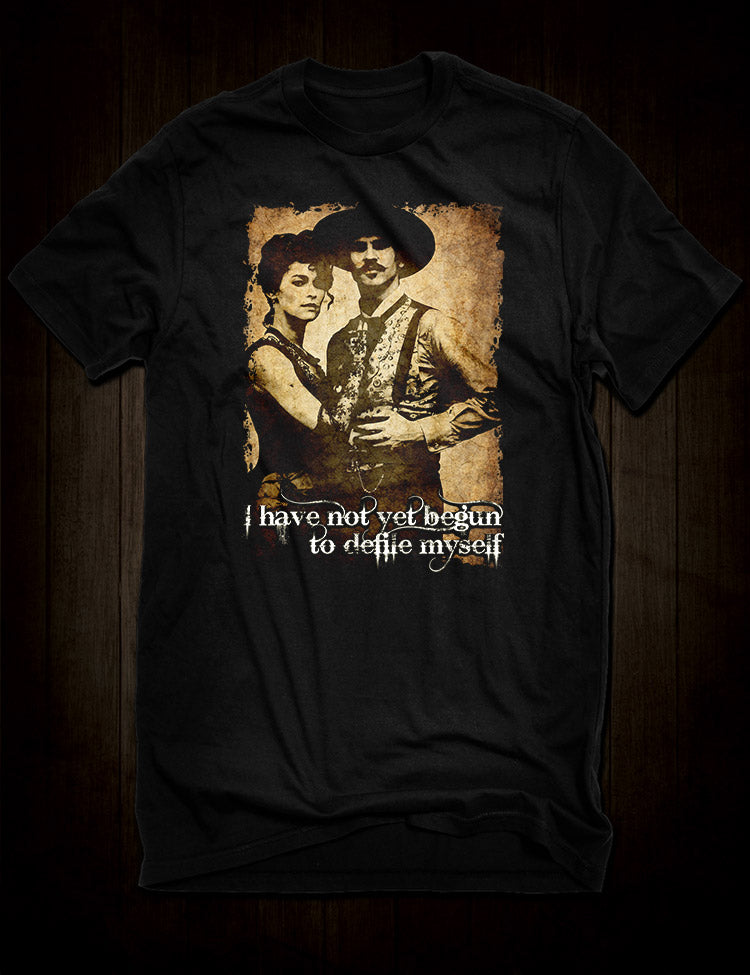
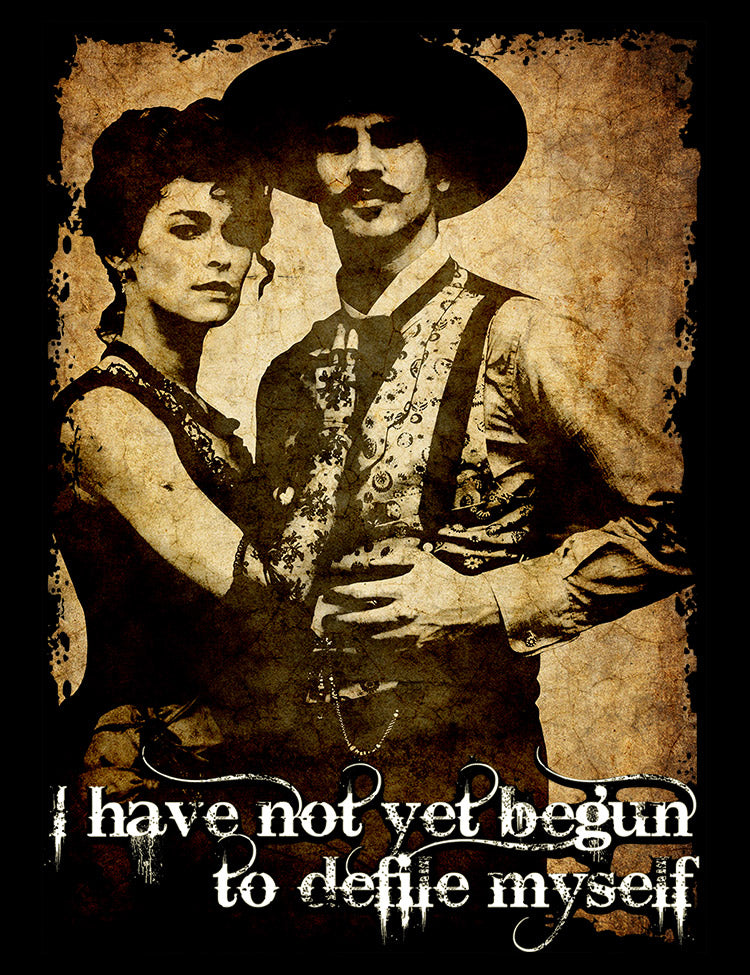






A Woman Like Satan T-Shirt

A WOMAN LIKE SATAN T-SHIRT
Brigitte Bardot, Seville Heat and a Dangerous Game of Desire
By 1959, Brigitte Bardot no longer needed a film to make her famous. The films needed Bardot. Three years after And God Created Woman turned her into an international phenomenon, she arrived in southern Spain to make La Femme et le Pantin, a French-Italian production directed by Julien Duvivier and released in Britain under the considerably more combustible title A Woman Like Satan. Bardot was twenty-four, photographed everywhere she went, and already carrying the peculiar burden of being simultaneously an actress, celebrity, fashion symbol and public provocation.
The story was not new. Pierre Louÿs had published La Femme et le Pantin — The Woman and the Puppet — in 1898, creating a tale of obsession in which a wealthy older man becomes hopelessly entangled with a younger woman who alternately attracts and rejects him. Cinema repeatedly returned to it. Josef von Sternberg transformed the novel into The Devil Is a Woman with Marlene Dietrich in 1935, while Luis Buñuel would later reinvent it as That Obscure Object of Desire in 1977. Duvivier's version occupies a fascinating position between those two celebrated adaptations.
Bardot plays Éva Marchand, pursued by the wealthy Don Mateo Díaz, played by Portuguese actor António Vilar. Their relationship unfolds amid Seville's streets, cafés and festivities, with the city's Feria providing a colourful backdrop to what is essentially an escalating contest of attraction, frustration and control. It was ideal Bardot territory: a character whose independence becomes almost impossible for the men around her to comprehend.
"It is impossible to see in her the touch of Satan."
Simone de Beauvoir's famous assessment of Bardot is particularly apt here. Bardot's screen persona had become inseparable from contemporary arguments about sexuality, independence and the changing position of women in post-war European culture. Her characters frequently seemed dangerous not because they behaved like conventional femmes fatales, but because they appeared unwilling to organise their lives around male expectations. Éva fits neatly into that pattern while also belonging to a much older literary tradition of the elusive, supposedly destructive woman.
Duvivier was an intriguing director for the material. His career stretched back to the silent era and included Pépé le Moko, Un Carnet de Bal and the extraordinary supernatural anthology Dead of Night. By the time he made La Femme et le Pantin, he represented an established generation of French filmmaking just as younger critics and directors associated with the Nouvelle Vague were preparing to overturn many of its conventions. Bardot herself belonged somewhere between those worlds: an international star working within traditional productions while embodying precisely the kind of cultural disruption the newer cinema celebrated.
The Spanish location brought its own difficulties. Filming took place in Seville during the Feria, and Bardot later recalled the oppressive heat and an uneasy relationship with Duvivier. Yet the setting gives the film much of its identity. Crowds, dancing, processions and brilliant sunlight surround a drama increasingly dominated by jealousy and emotional manipulation. The spectacle never entirely conceals the uncomfortable mechanism inherited from Louÿs: one person convinced that another can somehow be possessed.
The British title, A Woman Like Satan, inevitably pushes the film toward exploitation territory, suggesting something considerably more lurid than Duvivier actually made. That contrast is part of its appeal. Beneath the sensational title lies another chapter in a story that filmmakers have been interpreting for more than a century — and a revealing snapshot of Bardot at the moment when almost anything associated with her could become an international event.
💬 FREQUENTLY ASKED QUESTIONS (FAQs)
Q1: What was the original title of A Woman Like Satan?
A1: The original French title was La Femme et le Pantin, literally The Woman and the Puppet. The film was also distributed internationally under titles including The Female and Femmina.
Q2: What novel was A Woman Like Satan based on?
A2: The film was adapted from Pierre Louÿs' 1898 novel La Femme et le Pantin. The same book inspired several other films, including Josef von Sternberg's The Devil Is a Woman and Luis Buñuel's That Obscure Object of Desire.
Q3: Where was A Woman Like Satan filmed?
A3: Much of the film was shot in Seville, Spain, with production taking place around the city's famous Feria. The Spanish locations provide the film with its distinctive streets, crowds, festivities and intense southern sunlight.