







Flannery O'Connor's Peacocks: The Strange Birds Behind Southern Gothic
Some writers keep cats. Others acquire dogs, goldfish or the occasional unfortunate houseplant.
Flannery O'Connor preferred peacocks.
Not one or two decorative specimens wandering around the garden. At her family's Georgia farm, the author of Wise Blood and A Good Man Is Hard to Find maintained an extraordinary collection of birds that eventually included dozens of peafowl.
They were magnificent, noisy, territorial and entirely uninterested in behaving themselves.
Which, considering the characters populating O'Connor's fiction, made them rather appropriate companions.
But her fascination with these extravagant creatures was more than an eccentric hobby.
The peacocks became part of the strange imaginative world from which some of the twentieth century's most unsettling American fiction emerged.
The Girl Who Taught a Chicken to Walk Backwards
O'Connor's interest in unusual birds began remarkably early.
In 1932, when she was a young child living in Savannah, Georgia, a newsreel cameraman filmed her with a chicken she had trained to walk backwards.
The incident became one of the most frequently repeated anecdotes about her childhood.
It also revealed an early fascination with the peculiar behaviour of animals.
As an adult, O'Connor continued collecting birds, including ducks, geese and other domestic varieties.
Her most celebrated acquisitions, however, were the peafowl.
With their enormous ornamental tails, piercing cries and thoroughly unreasonable appearance, they possessed the combination of beauty and absurdity that would later become central to her literary imagination.
They were also wonderfully indifferent to human expectations.
O'Connor seems to have appreciated that quality.
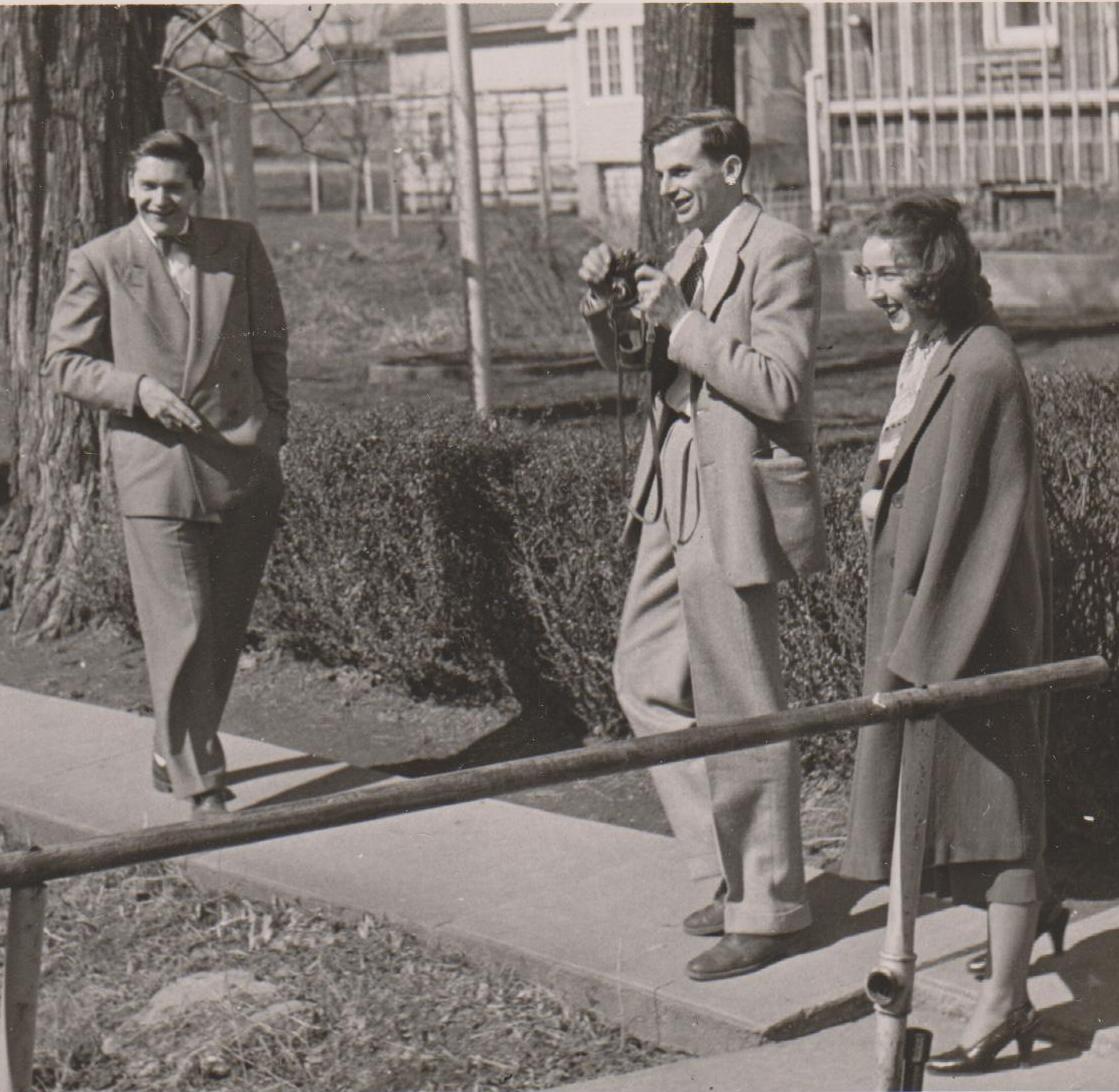

Andalusia: The Farm Behind the Fiction
In 1951, O'Connor returned to Georgia after developing systemic lupus erythematosus, the autoimmune disease that had also contributed to her father's early death.
She settled at Andalusia, the family dairy farm outside Milledgeville, where she lived with her mother, Regina.
Her illness severely restricted her mobility and eventually required her to use crutches.
Yet Andalusia was hardly an intellectual retreat.
O'Connor continued writing, corresponding with friends and fellow authors, receiving visitors and developing the fiction that established her reputation.
Regina managed the practical demands of the farm, providing the stability that allowed her daughter to concentrate on her work.
And outside the farmhouse, the peacocks multiplied.
By the later years of O'Connor's life, her collection had grown to more than forty birds.
Their cries carried across the property, while their brilliant plumage introduced an almost theatrical extravagance into the ordinary business of rural Georgia.
The farm was not simply a backdrop.
Its buildings, fields, workers and visitors helped shape the fictional landscapes of stories including Good Country People and A Circle in the Fire.


Why Were Peacocks So Important to Flannery O'Connor?
The peacock has a long history in Christian symbolism.
Its magnificent tail, with its numerous eye-like markings, has been associated with divine watchfulness, resurrection and immortality.
For O'Connor, a devout Catholic writing within the predominantly Protestant culture of the American South, such imagery carried particular significance.
Her fiction repeatedly explores moments when ordinary people encounter something beyond their understanding.
These encounters are rarely pleasant.
Characters are humiliated, exposed or confronted with truths they would rather ignore.
Sometimes violence provides the occasion for spiritual revelation.
The peacock offered a different expression of the same fascination.
Its extravagant beauty seemed almost excessive, as though nature had temporarily abandoned restraint.
O'Connor wrote about her birds in the essay The King of the Birds, describing their habits with characteristic precision and dry humour.
She understood that their magnificence was inseparable from their absurdity.
A peacock displaying its tail is an extraordinary spectacle.
It is also a large bird attempting to impress another bird.
Both observations can be true simultaneously.
Beauty, Violence and the Southern Gothic
O'Connor's fiction occupies an uncomfortable territory between religious vision and grotesque comedy.
Her characters are frequently proud, foolish, prejudiced or dangerously certain of their own righteousness.
She subjects them to situations that expose the distance between their beliefs and their behaviour.
In Good Country People, a supposedly sophisticated young woman discovers that intellectual superiority offers little protection against manipulation.
In A Good Man Is Hard to Find, an ordinary family journey becomes a confrontation with violence and the possibility of grace.
The peacocks provide an illuminating contrast.
They represent extraordinary beauty in a world where human beings are often incapable of recognising beauty, goodness or their own limitations.
Yet O'Connor never treated them as delicate ornaments.
They were living creatures with appetites, habits and thoroughly inconvenient personalities.
That refusal to separate the sublime from the ridiculous is essential to understanding her work.
Her Southern Gothic world is disturbing precisely because moments of revelation arrive through such unpromising circumstances.
The Birds Outlived Their Keeper
Flannery O'Connor died on 3 August 1964, aged just 39.
Her literary output was relatively small: two novels, two short-story collections published during her lifetime, and a substantial body of correspondence and essays.
Its influence was anything but modest.
Andalusia eventually became a preserved historic property, allowing visitors to encounter the landscape in which much of her mature work was created.
The farm's association with peafowl remains an important part of that history.
In 2019, archaeologists even investigated the possible location of the original bird enclosures, attempting to recover physical evidence of O'Connor's extraordinary collection.
It is a fitting detail.
A writer remembered for her fierce examination of human pride left behind a farmhouse, a remarkable body of fiction and the memory of birds whose principal talent was displaying themselves magnificently.
Somewhere in that contradiction lies the peculiar brilliance of Flannery O'Connor.
Explore more uncompromising literary voices in Hellwood's Famous Writers Collection, Cult & Classic Novels Collection and Literary Quotes Collection.

FLANNERY O'CONNOR T-SHIRT
Grace. Violence. Southern Gothic.
A Hellwood tribute to one of American literature's most uncompromising voices, whose fiction transformed rural Georgia into a landscape of grotesque humour, religious revelation and uncomfortable truths.
For readers who prefer their literature with sharp edges and absolutely no reassuring answers.
VIEW THE FLANNERY O'CONNOR T-SHIRT