
The Beast Must Die (1974): The Werewolf Break That Stopped a Horror Film
A country-house murder mystery usually offers a corpse, a collection of suspicious guests and a detective who knows rather more than he is saying.
In 1974, British horror studio Amicus made one small alteration: the murderer might have fur.
The Beast Must Die assembled a wealthy hunter, a heavily monitored estate and a roomful of people who might turn into wolves.
Then, just before the revelation, the film stopped and asked the audience to name the monster.
It called this the Werewolf Break.
The idea was gloriously shameless, and the director wanted nothing to do with it.
Eight People and One Very Bad Weekend
Tom Newcliffe, played by Calvin Lockhart, is a millionaire and big-game hunter with enough money to turn his country estate into a private surveillance operation.
Hidden cameras, microphones and sensors watch the grounds. A helicopter is available when ordinary suspicion proves insufficient.
Newcliffe has invited six guests. His wife Caroline is there too. He believes one of the group is a werewolf, and he intends to identify and kill it.
The company includes Peter Cushing as a professor of lycanthropy, Charles Gray as a diplomat, and a young Michael Gambon as a pianist.
Nobody is particularly pleased to discover that the host has organised a weekend of compulsory monster detection.
It is Agatha Christie by way of a laboratory and a hunting lodge. Silver, wolfsbane and the full moon replace fingerprints and train timetables.
The setup came from There Shall Be No Darkness, a 1950 story by science-fiction writer James Blish.
Screenwriter Michael Winder adapted it for Amicus, a studio better known for anthology horrors in which several nasty stories could be packed into one ticket.


What Was the Werewolf Break?
The film announces its rules almost immediately.
A voice informs viewers that this is a detective story in which they are the detectives. Their job is not to identify the murderer, but to work out who is the werewolf.
Near the climax, the action gives way to an on-screen countdown.
The Werewolf Break allows the audience a short interval, commonly described as thirty seconds, to reconsider the suspects and make a final guess.
No one is invited to phone a premium-rate number. No ballots are collected.
You simply sit in the dark and accuse someone, preferably without upsetting the person beside you.
The stunt resembles the exhibition gimmicks associated with American producer-director William Castle.
His 1961 thriller Homicidal offered a Fright Break, inviting nervous spectators to leave before the ending.
Amicus turned that logic inside out: stay in your seat, but participate.
The Werewolf Break is less an interruption of the plot than an advertisement for the pleasures of solving it.
It makes the audience part of the joke, whether they appreciate the invitation or not.
The Director Did Not Approve
Paul Annett was making his feature-directing debut.
According to his account, recorded for the film's later DVD release and summarised by the American Film Institute, the Werewolf Break was added in post-production by producer Milton Subotsky.
Annett discovered it when he saw the completed picture. He considered it an artificial interruption that stopped the film dead.
He had a point.
The film already asks viewers to investigate a series of clues; pausing the action to announce that fact is not exactly subtle.
But subtlety was hardly the selling point.
The title, the surveillance equipment and the increasingly frantic werewolf tests all belong to a production determined to keep several genres in the same room.
Its casting is also distinctive.
Lockhart's wealthy Black protagonist commands the estate, the technology and the investigation.
Combined with contemporary action-film rhythms and a conspicuously funky score, the result is a curious collision of British Gothic horror, 1970s thriller and American genre fashion.


A Gimmick That Outlived the Monster
The original 1974 release was not universally welcomed.
A contemporary Hollywood Reporter critic, quoted by the AFI Catalog, dismissed the audience-participation device as unnecessary.
Another version, released as Black Werewolf, removed the break entirely.
The underlying mystery still functioned.
That is precisely why the gimmick has survived in memory. It was not required to tell the story; it gave the film a personality beyond the story.
In an era when a cinema audience could not pause a screening, rewind a clue or immediately search for the ending, the invitation to make a guess had a particular charm.
The film briefly surrendered its own authority and handed the room a stopwatch.
Half a century later, the creature effects are not the main attraction.
Nor is the prospect of outwitting Peter Cushing.
It is the moment a horror film stops pretending to be a solemn nightmare and turns to the audience with a question.
All right, detective.
Who is the werewolf?
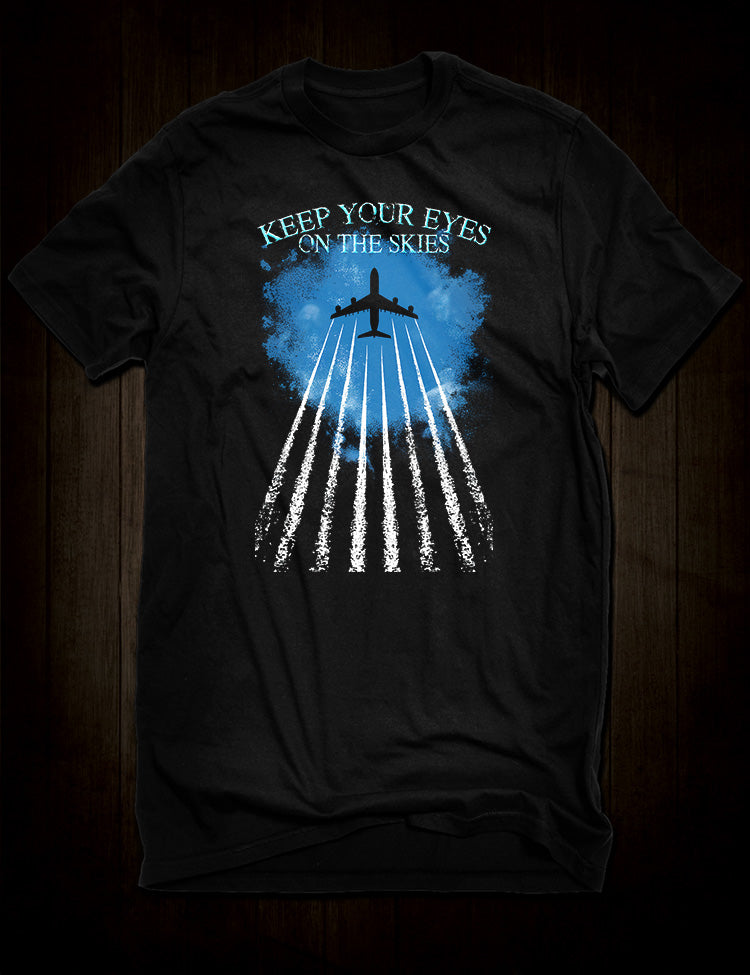
Discover the The Beast Must Die T-Shirt, inspired by Amicus Productions' wonderfully peculiar 1974 horror mystery.
Explore more vintage British horror through Hellwood's Horror Movies T-Shirt Collection and Cult Classic Movie T-Shirts.
For another excursion into British television and horror history, see the Hammer House of Horror T-Shirt.
 The Beast Must Die T-Shirt
THE BEAST MUST DIE T-SHIRT
Eight suspects. One werewolf. Thirty seconds to decide.
A Hellwood tribute to the cult 1974 Amicus horror film starring Calvin Lockhart, Peter Cushing, Marlene Clark and Michael Gambon.
Celebrate the country-house werewolf mystery that interrupted its own climax and challenged cinema audiences to identify the monster.
VIEW THE BEAST MUST DIE T-SHIRT