






Alternative 3: The April Fool TV Hoax That Escaped into Conspiracy Culture
On 20 June 1977, British television revealed that the Earth was doomed.
Scientists were disappearing. Governments knew an environmental catastrophe was approaching. The world's powerful had three possible solutions, and the most extraordinary involved secretly establishing human colonies beyond Earth.
Fortunately, none of it was true.
Alternative 3 was an elaborate Anglia Television April Fool that had suffered one rather important technical malfunction: it wasn't broadcast on April Fool's Day.
What followed turned the Alternative 3 TV hoax into something far stranger than its creators intended. Viewers believed it, conspiracy writers adopted it and a piece of television fiction gradually acquired a second life as supposed evidence.
The April Fool That Arrived in June
Alternative 3 was devised by writer David Ambrose and director Christopher Miles and presented by genuine broadcaster Tim Brinton. It adopted the visual grammar of serious 1970s current-affairs television: sober interviews, laboratories, scientific terminology and investigative reporting.
The programme began with Britain's real contemporary concern about the “brain drain” of scientists and engineers. Its fictional investigation then suggested something more sinister. Experts were not merely emigrating. Some were disappearing.
The trail eventually led to a fantastic explanation. Governments supposedly knew environmental damage would make Earth increasingly uninhabitable and were secretly preparing an escape route for a selected population.
It was meant to go out on 1 April.
Scheduling problems delayed transmission until 20 June, by which point the enormous date-shaped sign reading THIS IS A JOKE had effectively disappeared.
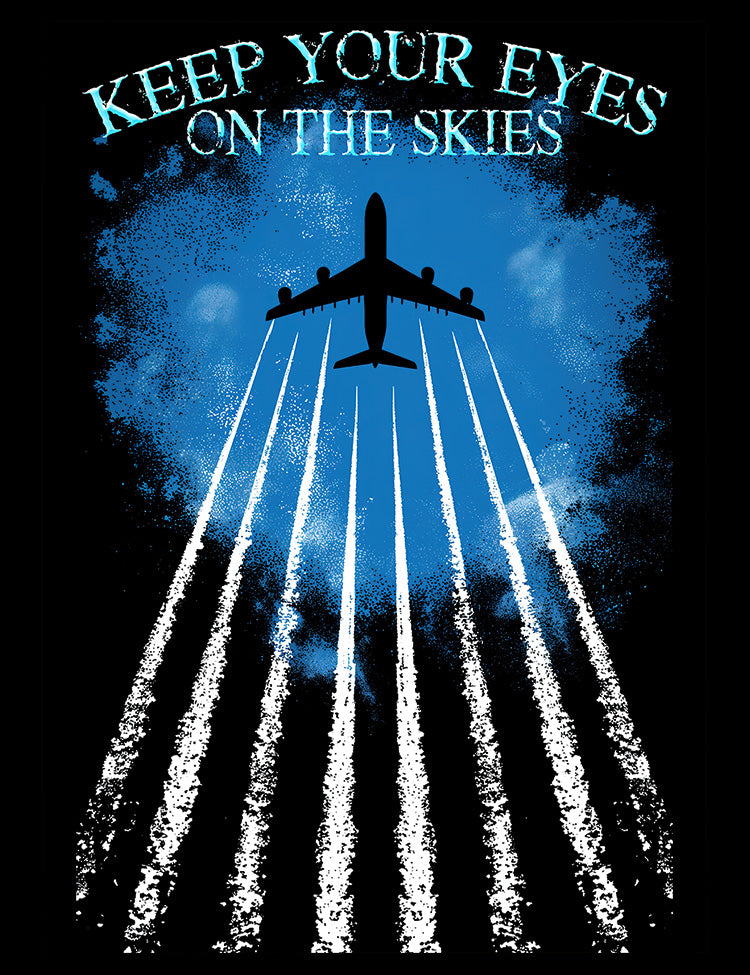
Hellwood's Alternative 3 T-Shirt returns to that wonderfully uneasy point where factual television and paranoid fiction became almost indistinguishable.

Mars Was Perfectly Timed
The hoax arrived at a particularly useful moment.
Less than a year earlier, NASA's Viking 1 had successfully landed on Mars. For the first time, television viewers had seen detailed photographs transmitted directly from the Martian surface.
Mars was no longer merely the territory of pulp novels and flying saucers. It had become a place that machinery could actually reach.
Alternative 3 exploited that new visual reality. Its fictional investigation eventually produced supposed evidence of covert operations on Mars, while the programme's documentary style encouraged viewers to process the extraordinary material using the same habits they brought to genuine television news.
The end credits identified the actors, but many viewers had already reached for the telephone.
ITV Anglia later recalled floods of calls from frightened people who had assumed they were watching a genuine exposé.

Then the Hoax Escaped
Most April Fool jokes have the decency to die on 2 April.
Alternative 3 proved more ambitious.
A 1978 book by Leslie Watkins, produced with Ambrose and Miles, expanded the scenario. Removed from the original television context, its mixture of secret space programmes, disappearing scientists and government concealment travelled remarkably well through the developing conspiracy underground.
The essential trick was familiar: genuine anxieties surrounded invented evidence. Environmental fears were real. Cold War secrecy was real. Space exploration was real. Governments had genuinely concealed uncomfortable things.
The fictional connective tissue therefore had plenty to attach itself to.
Later conspiracy writers recycled elements of the story, sometimes treating the programme less as satire than as a disguised disclosure — the familiar proposition that an inconvenient truth had been released as “fiction” so nobody would believe it.
At that point, disproving the story became unusually difficult. Saying it was a hoax could itself be interpreted as proof of the cover-up.
Conspiracy theories do enjoy a self-sealing lid.
When Television Looks Too Real
Alternative 3 belongs to a fascinating British tradition of television playing dangerous games with its own authority.
Fifteen years later, the BBC's Ghostwatch would use familiar presenters and live-broadcast conventions to persuade part of its audience that a suburban poltergeist investigation was actually unfolding on Halloween night.
Hellwood's Ghostwatch T-Shirt makes an appropriate companion piece, while the Classic Vintage TV T-Shirts collection contains considerably safer relics from the small screen.
For the conspiracy side of the equation, there is Hellwood's Conspiracy Theory collection; film fans can also find another suspiciously inconvenient mission to Mars in the Capricorn One T-Shirt.
Fiction Makes Excellent Evidence
Nearly half a century later, Alternative 3 feels less like an antique hoax than an early demonstration of a very modern problem.
Information loses its context as it travels. Satire becomes a screenshot. Fiction becomes a quotation. A joke becomes a document, then somebody discovers the document without discovering the joke.
The technology has changed. The mechanism has not.
Alternative 3 never uncovered a secret colony on Mars.
It discovered something rather more durable: once a sufficiently good story enters circulation, getting it back can be considerably harder than getting to Mars.

ALTERNATIVE 3 T-SHIRT
A Hellwood tribute to the 1977 television broadcast that began as an April Fool, arrived in June and escaped into conspiracy culture with its passport apparently in order.